
Sharkgate: The Coverup of the Nixon-Era Sharkey Farms Landfill in Parsippany, New Jersey and How Their People Were Juked
by Sophia Luinenburg
Site Description:
In the late 1960s to 1970s, the Sharkey Farms Landfill of Parsippany-Troy Hills, New Jersey was facing issues regarding reaching total capacity, partially spurred on by the proposed development of a Sewage Treatment Plant on site. Eventually in 1981, work had been finished on transporting waste from the landfill’s South Fill to its North Fill, allowing for the completion of the Sewage Treatment Plant. During this time, complaints had been filed regarding off smells and visible waste leaking from the fills. A later investigation by the New Jersey Department of Environmental Protection found that Ciba-Geigy, a pharmaceutical company, had been illegally dumping chemical waste in the landfill from 1962 to 1969, which coincides with accusations made towards Conrad Ringlieb, owner of the landfill, in 1969 regarding charges on pollution and illegal expansion. These accusations never made it to become actual charges, but we see now through later investigation that some of these accusations were correct. Why is it that Ringlieb was able to get away with harboring illegal waste? Why is it the records on what exactly was dumped at this site and by who are so lacking? What allows landfill operators and other polluters to get away with blatantly harming the environment people work and live in?
Lorem ipsum dolor sit amet, consectetur adipiscing elit, sed do eiusmod tempor incididunt ut labore et dolore magna aliqua. Ut enim ad minim veniam, quis nostrud exercitation ullamco laboris nisi ut aliquip ex ea commodo consequat. Duis aute irure dolor in reprehenderit in voluptate velit esse cillum dolore eu fugiat nulla pariatur. Excepteur sint occaecat cupidatat non proident, sunt in culpa qui officia deserunt mollit anim id est laborum.
Lorem ipsum dolor sit amet, consectetur adipiscing elit, sed do eiusmod tempor incididunt ut labore et dolore magna aliqua. Ut diam quam nulla porttitor massa id. Elementum facilisis leo vel fringilla est ullamcorper eget nulla. Orci porta non pulvinar neque laoreet suspendisse interdum. Purus semper eget duis at tellus at urna. Diam maecenas ultricies mi eget mauris. Diam ut venenatis tellus in metus vulputate eu. Ullamcorper morbi tincidunt ornare massa eget egestas. Quis eleifend quam adipiscing vitae proin. Consectetur adipiscing elit pellentesque habitant. Cras fermentum odio eu feugiat pretium nibh ipsum consequat nisl. Lectus mauris ultrices eros in cursus turpis massa. Luctus accumsan tortor posuere ac. Porttitor eget dolor morbi non arcu. Maecenas pharetra convallis posuere morbi leo urna molestie. Neque convallis a cras semper auctor neque vitae. In iaculis nunc sed augue. Suspendisse interdum consectetur libero id faucibus. Sit amet porttitor eget dolor.
Felis eget nunc lobortis mattis aliquam faucibus. At elementum eu facilisis sed odio. Eu facilisis sed odio morbi quis commodo odio aenean sed. Habitasse platea dictumst quisque sagittis purus sit amet. Et ultrices neque ornare aenean euismod elementum nisi quis eleifend. Velit dignissim sodales ut eu sem integer. Morbi tempus iaculis urna id volutpat lacus laoreet non curabitur. Aliquam eleifend mi in nulla posuere sollicitudin aliquam. Nunc congue nisi vitae suscipit. Convallis tellus id interdum velit laoreet id. Turpis in eu mi bibendum neque egestas. Magna fermentum iaculis eu non diam phasellus vestibulum. In cursus turpis massa tincidunt dui ut ornare lectus sit.
Non pulvinar neque laoreet suspendisse. Eros donec ac odio tempor orci. Nullam non nisi est sit amet facilisis magna etiam tempor. Platea dictumst vestibulum rhoncus est pellentesque elit ullamcorper. Eleifend donec pretium vulputate sapien nec sagittis aliquam. Proin fermentum leo vel orci porta. Eget dolor morbi non arcu risus quis varius quam quisque. Nec ultrices dui sapien eget mi proin sed. Nisl nisi scelerisque eu ultrices vitae auctor eu augue. Pellentesque pulvinar pellentesque habitant morbi tristique senectus et netus et. Pellentesque habitant morbi tristique senectus et. Pulvinar elementum integer enim neque volutpat ac. Vel orci porta non pulvinar neque. Laoreet sit amet cursus sit amet.
Pharetra massa massa ultricies mi quis hendrerit dolor magna. Mattis nunc sed blandit libero volutpat. Nec ultrices dui sapien eget. Gravida neque convallis a cras semper auctor neque. Aenean et tortor at risus viverra adipiscing at. Quisque non tellus orci ac auctor augue mauris. Ultrices in iaculis nunc sed augue lacus. Quam elementum pulvinar etiam non. Felis bibendum ut tristique et egestas. Sagittis nisl rhoncus mattis rhoncus. Ac ut consequat semper viverra. Volutpat commodo sed egestas egestas fringilla phasellus faucibus scelerisque. Urna condimentum mattis pellentesque id nibh tortor. Erat nam at lectus urna duis convallis convallis. Malesuada fames ac turpis egestas sed tempus urna et pharetra. Pellentesque diam volutpat commodo sed egestas egestas. Interdum velit euismod in pellentesque massa placerat duis ultricies lacus. Est velit egestas dui id. Pellentesque id nibh tortor id aliquet lectus proin nibh. Id nibh tortor id aliquet lectus proin nibh nisl.
Primary Sources:
Title: Remedial Investigation and Feasibility Study
Sharkey Farms Landfill Site
Task 3 (Site Investigations), July 1986
Task 6 (Evaluation of Alternatives), August 1986
Task 7 (Conceptual Design of Selected Remedial Alternative), July 1987
For The New Jersey Department of Environmental Protection’s Hazardous Site
Mitigation Administration
Signed by James J. Kennedy and George J. Kehrberger
Location: The Parsippany Public Library
Description: These are a set of three binders pertaining to the investigation of the pollution at the Sharkey Landfill and the proposed solutions to it. There are likely more binders, but these are the only three that the library had on hand.
Title: Coping with the throw-away age – Part 3
Political games keep disposal business on ‘hot seat’
Feb 26, 1970
By Betty Greenman
Link: https://www.newspapers.com/image/244439352
Location: The Madison-Florham Park Eagle Newspaper
Description: Part 3 of a 4 part series going over the Sharkey Farms Landfill from the perspective of a citizen of Parsippany, looking at the site’s operations and current political climate. This one very specifically looks at the political issues, first being that Ringlieb was accused of illegal pollution and second how the need to dispose of more waste was putting strains not only on landfills but civilian wallets.
Analysis:
This news article is just one component of a series that covers the operation at the Sharkey Farms Landfill and a handful of its surrounding issues. As the title of this article suggests, it is an insight into some of the overarching political issues that Sharkey and its owner Conrad Ringlieb were facing around the time of its closure. More specifically it mentions his attempt at getting a 25 year license to operate the landfill, the voices of those saying the landfill couldn’t last long enough for that license, and the pressure that the possible shutdown of Sharkey would propose. It lists Sharkey as an essential component of waste management, seeing as it serves many different municipalities. Overall it seems to suggest that there were issues with Sharkey, but the service that it provides to the state of New Jersey is far too valuable, and that it needs to remain open.
When you read a line like, “Ringlieb won’t be there 10 years from now,” you’d think that people were planning for Sharkey to shut down, but it appears that Sharkey was deemed too necessary for the state to do so, at least at that moment. During this time period a lot of New Jersey landfills were reaching capacity, such as Miele’s landfill in Chatham. Considering that these places still need places to put their garbage, it was inevitable that these townships would center around a large one that was nearby, but putting on that extra load wasn’t entirely in the cards. It was only when these places were turned down elsewhere that Ringlieb, “relented and let the collectors in.” In order for Sharkey to remain in operation and keep these and the other 146 towns it was helping in the “total county landfill plan,” they needed to find some way to keep it open, which included various plans of either incineration or moving waste to other landfills such as Mount Olive to better manage the amount Sharkey had been filling by. Considering that Ringlieb had graciously donated 10 acres of land for his five year, five times renewable license, you’d expect that his planning would have been more complete, but unfortunately his landfill did shut down just two years after this article was published.
Title: Big Refuse Dump May Close, June 18 1972
Link: https://www.nytimes.com/1972/06/18/archives/big-refuse-dump-may-close.html
Location: The New York Times Newspaper
Description: This is a news article that delves into the proposed shutdown of the Sharkey Farms Landfill and the proposed solutions and problems. It makes specific mention of planned expansion, purchase by the Morris County Board of Freeholders for construction of an incinerator, and direct mention of locals complaining about smell and pollution.
Title: Pompton Lakes use will double Sparta dump activity
September 10, 1972
By Dave Shelton
Link: https://www.newspapers.com/image/1353194676
Location: New Jersey Herald Newspaper
Description: An article about how the shutdown of Sharkey is directly affecting other nearby landfills. It makes clear the direct impact to citizens that its shutdown had.
Title: Fahy spurs action on garbage project
March 22, 1974
By Tom Kilkenny
Link: https://newspapers.com/image/528555674
Location: New Jersey Herald Newspaper
Description: This article brings to light the mayor of Parsippany’s direct involvement in the problem of relocating the garbage in Sharkey to accommodate the Sewage Treatment Plant. It makes direct mention of the plan to expand the Mount Olive dump to accommodate moving exactly as much garbage as necessary for the STP, as well as shows Fahy putting specific blame on the NJ DEP for part of Sharkey’s overfilling problem.
Secondary Sources:
Source 1:
Goldshore, L. (1976). A Flood of Environmental Legislation: An Analysis of the New Jersey Experience. Seton Hall Legilsative Journal, 1(2), 1–18.
This is an article on the history of New Jersey’s waste management laws and systems.
This source gives significant context for how New Jersey was handling environmental issues around the time of the Sharkey Farm Landfill being shut down. A major contribution to Sharkey having been shut down was the formation of the New Jersey Department of Environmental Protection (NJ DEP) and the rules and regulations it created. This source not only contains context for why it had to be created and how it was, but also many of the regulations put forth that would have directly affected Sharkey, such as the 1970 Solid Waste Management Act. Directly referenced within the source is also a legal case between the owner of Sharkey and Parsippany, Ringlieb v. Parsippany-Troy Hills, which challenged if municipalities could have overlapping regulations with the state. This gives great context into exactly why there were so many issues surrounding the shutdown of Sharkey, as it means its shutdown and the creation of these regulations began at more or less the same time.
Source 2:
Iravanian, A., & Ravari, S. O. (2020). Types of contamination in landfills and effects on the environment: A review study. IOP Conference Series: Earth and Environmental Science, 614(1), 012083. https://doi.org/10.1088/1755-1315/614/1/012083
This is an article on the different types of landfills, their histories, and how they pollute and manage pollution.
This source will be helpful in understanding the types of pollution found at the Sharkey Farms Landfill. It explains a little of the history of how landfills have been and are classified. Two major pollutants found at Sharkey were various volatile organic compounds and inorganic or metallic contaminants, and this source gives an understanding of the harm of those compounds and how they may spread and harm nearby communities. It also explains how certain types of landfills better contain their contamination through legally mandated regulations such as compactors to reduce the area and permeability of waste, natural formations of clay to contain groundwater leakage, and coverings to reduce rainwater pooling and collecting contaminants.
Source 3:
Makarichi, L., Jutidamrongphan, W., & Techato, K. (2018). The evolution of waste-to-energy incineration: A review. Renewable and Sustainable Energy Reviews, 91, 812–821. https://doi.org/10.1016/j.rser.2018.04.088
This is an article that looks into the history of incineration, pollution from incinerators, and how modern ones manage their emissions.
This source provides two helpful pieces of information when it comes to Sharkey Farms. To solve the overfilling issue at Sharkey, the Morris County Freeholders planned an incinerator, which itself would have caused issues. I hope to use this source primarily to help highlight the types of pollution that incinerators generate to help give context to why this would have become a problem for the people of Parsippany Troy-Hills. It also contains historical context to incineration as a technology which may be helpful for framing why they may have thought this a good idea.
Image Analysis:
Lorem ipsum dolor sit amet, consectetur adipiscing elit, sed do eiusmod tempor incididunt ut labore et dolore magna aliqua. Ut diam quam nulla porttitor massa id. Elementum facilisis leo vel fringilla est ullamcorper eget nulla. Orci porta non pulvinar neque laoreet suspendisse interdum. Purus semper eget duis at tellus at urna. Diam maecenas ultricies mi eget mauris. Diam ut venenatis tellus in metus vulputate eu. Ullamcorper morbi tincidunt ornare massa eget egestas. Quis eleifend quam adipiscing vitae proin. Consectetur adipiscing elit pellentesque habitant. Cras fermentum odio eu feugiat pretium nibh ipsum consequat nisl. Lectus mauris ultrices eros in cursus turpis massa. Luctus accumsan tortor posuere ac. Porttitor eget dolor morbi non arcu. Maecenas pharetra convallis posuere morbi leo urna molestie. Neque convallis a cras semper auctor neque vitae. In iaculis nunc sed augue. Suspendisse interdum consectetur libero id faucibus. Sit amet porttitor eget dolor.
Felis eget nunc lobortis mattis aliquam faucibus. At elementum eu facilisis sed odio. Eu facilisis sed odio morbi quis commodo odio aenean sed. Habitasse platea dictumst quisque sagittis purus sit amet. Et ultrices neque ornare aenean euismod elementum nisi quis eleifend. Velit dignissim sodales ut eu sem integer. Morbi tempus iaculis urna id volutpat lacus laoreet non curabitur. Aliquam eleifend mi in nulla posuere sollicitudin aliquam. Nunc congue nisi vitae suscipit. Convallis tellus id interdum velit laoreet id. Turpis in eu mi bibendum neque egestas. Magna fermentum iaculis eu non diam phasellus vestibulum. In cursus turpis massa tincidunt dui ut ornare lectus sit.
Non pulvinar neque laoreet suspendisse. Eros donec ac odio tempor orci. Nullam non nisi est sit amet facilisis magna etiam tempor. Platea dictumst vestibulum rhoncus est pellentesque elit ullamcorper. Eleifend donec pretium vulputate sapien nec sagittis aliquam. Proin fermentum leo vel orci porta. Eget dolor morbi non arcu risus quis varius quam quisque. Nec ultrices dui sapien eget mi proin sed. Nisl nisi scelerisque eu ultrices vitae auctor eu augue. Pellentesque pulvinar pellentesque habitant morbi tristique senectus et netus et. Pellentesque habitant morbi tristique senectus et. Pulvinar elementum integer enim neque volutpat ac. Vel orci porta non pulvinar neque. Laoreet sit amet cursus sit amet.
Pharetra massa massa ultricies mi quis hendrerit dolor magna. Mattis nunc sed blandit libero volutpat. Nec ultrices dui sapien eget. Gravida neque convallis a cras semper auctor neque. Aenean et tortor at risus viverra adipiscing at. Quisque non tellus orci ac auctor augue mauris. Ultrices in iaculis nunc sed augue lacus. Quam elementum pulvinar etiam non. Felis bibendum ut tristique et egestas. Sagittis nisl rhoncus mattis rhoncus. Ac ut consequat semper viverra. Volutpat commodo sed egestas egestas fringilla phasellus faucibus scelerisque. Urna condimentum mattis pellentesque id nibh tortor. Erat nam at lectus urna duis convallis convallis. Malesuada fames ac turpis egestas sed tempus urna et pharetra. Pellentesque diam volutpat commodo sed egestas egestas. Interdum velit euismod in pellentesque massa placerat duis ultricies lacus. Est velit egestas dui id. Pellentesque id nibh tortor id aliquet lectus proin nibh. Id nibh tortor id aliquet lectus proin nibh nisl.
Consequat semper viverra nam libero justo laoreet sit. Ornare massa eget egestas purus viverra accumsan in. Dignissim diam quis enim lobortis scelerisque fermentum dui faucibus in. Curabitur gravida arcu ac tortor dignissim convallis aenean et tortor. Erat nam at lectus urna duis convallis convallis tellus. Risus at ultrices mi tempus imperdiet nulla malesuada pellentesque elit. Turpis egestas maecenas pharetra convallis posuere morbi leo. Nulla facilisi etiam dignissim diam quis enim lobortis. Pellentesque massa placerat duis ultricies. Est ante in nibh mauris cursus. Massa sed elementum tempus egestas sed sed risus. Augue ut lectus arcu bibendum at varius. Neque viverra justo nec ultrices dui sapien eget mi proin. Non diam phasellus vestibulum lorem sed risus ultricies. Venenatis cras sed felis eget velit aliquet sagittis id consectetur. Tristique et egestas quis ipsum suspendisse. Facilisis volutpat est velit egestas dui. Non nisi est sit amet facilisis magna. Scelerisque mauris pellentesque pulvinar pellentesque habitant morbi tristique senectus. Bibendum at varius vel pharetra vel turpis nunc.
Data Analysis:
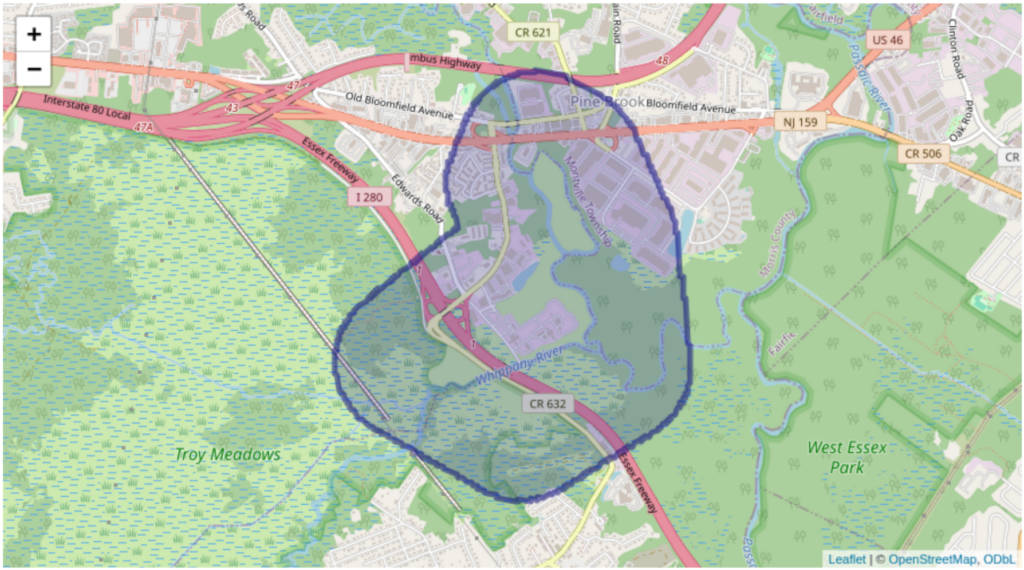
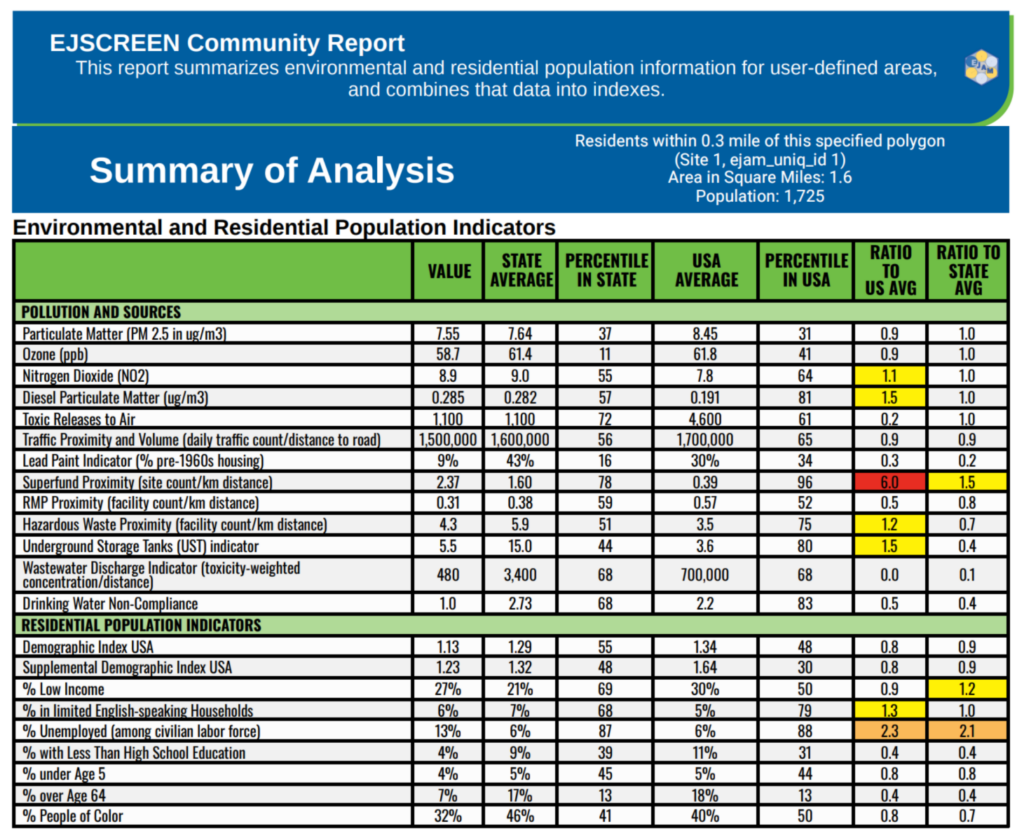 The Sharkey Farms Landfill was located in Parsippany-Troy Hills and partially within East Hanover, sitting between highways i80, i280, and route 46 at their junction. The primary problem at Sharkey Farms was the hazardous waste dumped there by Ciba Geigy and the potential for it to leak into the aquifers below it and into the Rockaway and Whippany rivers that flow past it and into the Passaic river. Using the EJScreen website, an area was drawn around the different fills of Sharkey and added a buffer of 0.3 miles to try and encompass some nearby residential areas. Some data and information from a Remedial Investigation and Feasibility Survey on the Sharkey Farms Landfill will also be utilized to better contextualize the site itself. All of this will be to answer how these people were able to get the help they wanted from the state after raising complaints.
Thanks to the efforts of the New Jersey Department of Environmental Protection and the United States Environmental Protection Agency, the data shows relatively low numbers across the board in terms of pollution sources. The only marks that show worse than average in the state is the Superfund Proximity tag, which only makes sense as Sharkey Farms itself is a Superfund Site. Otherwise, compared to the US, not including the Superfund statistic, we see that Nitrogen Dioxide, Diesel Particulate Matter, Hazardous Waste Proximity, and Underground Storage Tanks all have values that are 1.1 to 1.5 times that of the United States average. Nobody wants to see any of these, Nitrogen Dioxide and Diesel Particulate Matter emissions both harm air quality which can leave to lung issues and acid rain, and Hazardous Waste Proximity and Underground Storage Tanks mean that people live nearby places that handle and store materials hazardous to the environment, although those last two give us a clue as to why the data looks like this. In turn with Sharkey Landfill being shut down, in its place the Parsippany Sewage Treatment Plant was built in its place, and in modern day a garbage transfer station exists next to it. The reason that those levels are elevated is because of the industry that exists in place of Sharkey Farms, trucks and machines that are burning diesel and putting out its emissions are operating in this area moving hazardous waste to and fro, with a sewage treatment plant that has to store all the water it processes somewhere. The over half a million pounds of hazardous waste dumped by Ciba-Geigy was effectively cleaned up by the EPA and DEP through pumping the aquifers and treating them, and as such if we look at the problems we would expect if that didn’t happen, we see that the Toxic Releases to Air statistic is on average with the state and below that with the United States average, meaning that none of those chemicals are coming loose and releasing into the air, and with that group water treated Drinking Water Non-Compliance is actually better than both the state and country averages. The people’s complaints were heard and received quite well.
Now we have to ask ourselves why these complaints were heard. When we look at some famous cases such as the protests over dioxin pollution in Newark, New Jersey, we see that people were going out in public and making it visible to everyone that there was a problem and they needed to be heard. In Parsippany, most of what we see is that people were filing complaints directly with the DEP and getting their voices heard clearly. There are three statistics that are most important to look at here, % with Less Than High School Education, % Unemployed, and % Low Income. The High School Education statistic shows that a great number of people here have a full education, with the ratio of those with less than being 0.4 times that of both the state and country averages. This means everyone that lives or has lived here has had access in some way to these resources, in turn meaning fewer children had to drop out of school to help make money for their families. This leads us into our next statistic, Low Income. This one is actually pretty close, going 0.9 times the average of the US and 1.2 times the average of the state. Neither struggling or exceeding in this regard, there isn’t a unique issue here with income, although this becomes very interesting with the next statistic. In this area, the percent of people who are unemployed is at 13%, 2.3 times that of the United States and 2.1 times that of New Jersey. This is incredibly high, putting this area in the 88th percentile of % Unemployed. This can be interpreted a few ways, as people may be struggling to find work or people may not require work, such as those who are retired. One way or the other, despite a substantial number of people not working, a not at all substantial number of people are struggling with making money. This is a pretty comfortable place to be it would seem, and trying to protect that is without a doubt a priority of the town, so when complaints are filed they are expected to be heard.
Taking both in together, we see a pretty simple pattern. Pollution in modern day in this area is pretty low. The only notable emissions appear to be the result of the new industry in this area, and that pollution is relatively well maintained. Having gone there personally it is at worst a slight odor, but I only noticed that when entering the actual premises. The chemical cleanup at the site has done the job that was expected of it, with the pollution targets hit exactly as planned. This should be expected, though, this is a well-to-do town whose problems seem to be more from its success than its failures. If the citizens noticed a problem such as a landfill having hazardous or exposed pollutants and filed the proper complaints, the town would have to handle this issue. It would be too much of a detriment to allow those problems to pile up and ruin the image and possibly lose its people.