
Illegal Dumping, Public Corruption, and Environmental Inequality in North Bergen, New Jersey (1986)
by Brian Orozco
Site Description:
In the 1980s illegal dumping occurred across the Hudson in the Meadowlands and in North Bergen, New Jersey. Waste was transported from New York to illegal dumping sites in the Meadowlands and North Bergen. Starting in 1986 illegal dumping was facilitated by payments made by participants to North Bergen government officials. These payments facilitated both protection and facilitation of illegal dumping. I intend to explore the role that political corruption and bribery played in illegal dumping in North Bergen and what role government officials played in facilitation and protection of illegal dumping. Further, I wish to investigate the intersection of politics and economics and their influence on waste disposal in the Meadowlands and North Bergen while ignoring environmental impacts. This project holds significance with regards to environmental justice because it explores how political and governmental decisions regarding waste disposal and political corruption can impact certain communities and the environment in a detrimental way while allowing other businesses and people to be advantaged.
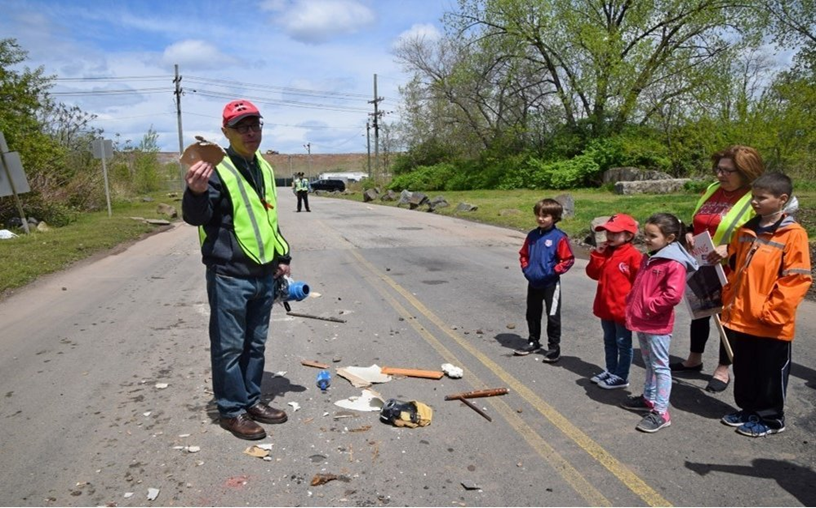
Lorem ipsum dolor sit amet, consectetur adipiscing elit, sed do eiusmod tempor incididunt ut labore et dolore magna aliqua. Ut enim ad minim veniam, quis nostrud exercitation ullamco laboris nisi ut aliquip ex ea commodo consequat. Duis aute irure dolor in reprehenderit in voluptate velit esse cillum dolore eu fugiat nulla pariatur. Excepteur sint occaecat cupidatat non proident, sunt in culpa qui officia deserunt mollit anim id est laborum.
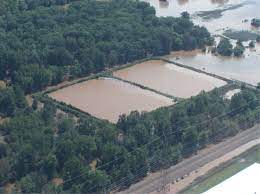
Lorem ipsum dolor sit amet, consectetur adipiscing elit, sed do eiusmod tempor incididunt ut labore et dolore magna aliqua. Ut diam quam nulla porttitor massa id. Elementum facilisis leo vel fringilla est ullamcorper eget nulla. Orci porta non pulvinar neque laoreet suspendisse interdum. Purus semper eget duis at tellus at urna. Diam maecenas ultricies mi eget mauris. Diam ut venenatis tellus in metus vulputate eu. Ullamcorper morbi tincidunt ornare massa eget egestas. Quis eleifend quam adipiscing vitae proin. Consectetur adipiscing elit pellentesque habitant. Cras fermentum odio eu feugiat pretium nibh ipsum consequat nisl. Lectus mauris ultrices eros in cursus turpis massa. Luctus accumsan tortor posuere ac. Porttitor eget dolor morbi non arcu. Maecenas pharetra convallis posuere morbi leo urna molestie. Neque convallis a cras semper auctor neque vitae. In iaculis nunc sed augue. Suspendisse interdum consectetur libero id faucibus. Sit amet porttitor eget dolor.
Felis eget nunc lobortis mattis aliquam faucibus. At elementum eu facilisis sed odio. Eu facilisis sed odio morbi quis commodo odio aenean sed. Habitasse platea dictumst quisque sagittis purus sit amet. Et ultrices neque ornare aenean euismod elementum nisi quis eleifend. Velit dignissim sodales ut eu sem integer. Morbi tempus iaculis urna id volutpat lacus laoreet non curabitur. Aliquam eleifend mi in nulla posuere sollicitudin aliquam. Nunc congue nisi vitae suscipit. Convallis tellus id interdum velit laoreet id. Turpis in eu mi bibendum neque egestas. Magna fermentum iaculis eu non diam phasellus vestibulum. In cursus turpis massa tincidunt dui ut ornare lectus sit.
Non pulvinar neque laoreet suspendisse. Eros donec ac odio tempor orci. Nullam non nisi est sit amet facilisis magna etiam tempor. Platea dictumst vestibulum rhoncus est pellentesque elit ullamcorper. Eleifend donec pretium vulputate sapien nec sagittis aliquam. Proin fermentum leo vel orci porta. Eget dolor morbi non arcu risus quis varius quam quisque. Nec ultrices dui sapien eget mi proin sed. Nisl nisi scelerisque eu ultrices vitae auctor eu augue. Pellentesque pulvinar pellentesque habitant morbi tristique senectus et netus et. Pellentesque habitant morbi tristique senectus et. Pulvinar elementum integer enim neque volutpat ac. Vel orci porta non pulvinar neque. Laoreet sit amet cursus sit amet.
Pharetra massa massa ultricies mi quis hendrerit dolor magna. Mattis nunc sed blandit libero volutpat. Nec ultrices dui sapien eget. Gravida neque convallis a cras semper auctor neque. Aenean et tortor at risus viverra adipiscing at. Quisque non tellus orci ac auctor augue mauris. Ultrices in iaculis nunc sed augue lacus. Quam elementum pulvinar etiam non. Felis bibendum ut tristique et egestas. Sagittis nisl rhoncus mattis rhoncus. Ac ut consequat semper viverra. Volutpat commodo sed egestas egestas fringilla phasellus faucibus scelerisque. Urna condimentum mattis pellentesque id nibh tortor. Erat nam at lectus urna duis convallis convallis. Malesuada fames ac turpis egestas sed tempus urna et pharetra. Pellentesque diam volutpat commodo sed egestas egestas. Interdum velit euismod in pellentesque massa placerat duis ultricies lacus. Est velit egestas dui id. Pellentesque id nibh tortor id aliquet lectus proin nibh. Id nibh tortor id aliquet lectus proin nibh nisl.
Primary Sources:
Title: “Cleaning Up in New Jersey”
Authors: John J. Degnan and Steven A. Tasher
Publication: EPA Journal, June 1980
Type: Government officials’ contemporary account
Link: https://nepis.epa.gov/Exe/ZyPURL.cgi?Dockey=93000D5G.TXT
Location: U.S. Environmental Protection Agency, National Service Center for Environmental Publications digital archive.
Description: This article discusses illegal dumping and the financial aspects related to illegal dumping in New Jersey. I will use this article to show that illegal dumping and enforcement problems were already present prior to the 1986 North Bergen illegal dumping incident.
Title: Ground Water Contamination in the Northeast States
Author: U.S. Environmental Protection Agency archival report
Type: Government environmental report
Link: https://nepis.epa.gov/Exe/ZyPURL.cgi?Dockey=9101LT1D.TXT
Location: EPA digital document archive.
Description: This document addresses groundwater contamination and landfill sites in the northeastern U.S., specifically in the Hackensack Meadowlands. I will use this document to show how the high utilization of the area for landfill purposes resulted in issues regarding groundwater and surface water quality.
Title: “Eight Thousand Tons a Day of Somebody Else’s Garbage”
Author: Gregg E. Easterbrook
Publication: Waste Age, January 1978, volume 9, number 1, page 22 and following
Type: Contemporary magazine article
Location: Waste Age periodical collections; full original not yet located.
Reference link: https://nepis.epa.gov/Exe/ZyPURL.cgi?Dockey=91014WAW.TXT
Description: This article focuses on the large amount of landfill being placed in the Hackensack Meadowlands and attempts at landfill management. I will use this article to show how the Meadowlands became utilized for illegal dumping in the area prior to the 1986 illegal dumping incident.
Title: State v. Ball, 268 N.J. Super. 72
Author: Superior Court of New Jersey, Appellate Division; opinion by Judge Thomas
Date: August 6, 1993
Type: Original judicial opinion
Link: https://law.justia.com/cases/new-jersey/appellate-division-published/1993/268-n-j-super-72-1.html
Location: New Jersey court records, reproduced in Justia’s online legal archive.
Description: This legal decision details the 1986 illegal dumping incident in North Bergen. It includes information on the locations of the illegal dumping, payments made to officials, and attempts to evade environmental laws. This document is relevant to my paper because it directly links illegal dumping to political corruption.
Title: State v. Patrick Ball
Author: Supreme Court of New Jersey
Date: 1995
Type: Original judicial opinion
Link: https://law.justia.com/cases/new-jersey/supreme-court/1995/a-17-94-opn.html
Location: New Jersey Supreme Court records, reproduced in Justia.
Description: This decision also includes information regarding the financial aspects of the illegal dumping incident in North Bergen. Specifically, money made by waste brokers and payments made to officials are also included in this document. I will use this document to show the potential financial gain associated with illegal dumping.
Secondary Sources:
New Jersey Waste Policy and Corruption
Howell, Jordan P. Garbage in the Garden State. Rutgers University Press, 2023.
Source: https://www.rutgersuniversitypress.org/garbage-in-the-garden-state/9781978833395
General coverage: This history looks at the evolution of solid waste in New Jersey. It covers landfills, planning, political influence, and organized crime.
Relevance to my site: Howell places the scheme of illegal dumping and bribery that occurred in North Bergen in 1986 into a statewide historical context. He also places the illegal dumping and bribery scheme into the context of landfill issues, waste disposal, and regulation. I would utilize this book to address the political nature of waste disposal in New Jersey and the potential for corruption. This book does not serve as direct evidence for demographics of neighborhoods around the landfill sites or the specific sites in North Bergen. Instead, it offers historical context.
Meadowlands Dumping History and Public Memory
Ard, Patricia. “Garbage in the Garden State: A Trash Museum Confronts New Jersey’s Image.” The Public Historian 27, no. 3 (2005): 57-66. https://doi.org/10.1525/tph.2005.27.3.57.
General coverage: This paper looks at the Lyndhurst Trash Museum (1989-1999) and its use of the history of illegal dumping in the Hackensack Meadowlands.
Relevance to my site: Ard is helpful due to the connection between the western edge of North Bergen and the Hackensack Meadowlands landscape, as well as because the 1986 illegal dumping case also involved the Hackensack Meadowlands Development Commission. She documents illegal dumping as a localized issue that had reached a critical point and that in the aftermath of the 1986 illegal dumping case, local organizations began to grapple with and account for this issue. This article would be useful for exploring the impact of illegal dumping on the image of the region and the ways in which dumping was made into an environmental issue. This article concentrates on a museum and interpretation and does not address specific issues such as the location of any of the North Bergen illegal dumping sites or the residents surrounding those sites.
Long-Term Environmental Transformation of the Meadowlands
Marshall, Stephen. “The Meadowlands Before the Commission: Three Centuries of Human Use and Alteration of the Newark and Hackensack Meadows.” Urban Habitats 2, no. 1 (2004).
Source: https://www.urbanhabitats.org/v02n01/3centuries_full.html
General coverage: This environmental history details the century-long history of development, sewage contamination, filling, waste disposal, and alterations to wetlands in the area prior to the establishment of the Meadowlands Commission in 1969.
Relevance to my site: Marshall provides insight into the potential path toward the normalization of dumping in the broader context of North Bergen. He details the repeated filling or development of wetlands and decades of contaminant accumulation prior to the 1980s in the area. This history can aid in understanding the location of the 1986 illegal dumping operations as well as the implications of viewing marshlands as disposable. Additionally, this history can provide context for the establishment of a regulatory authority for waste and development in the area. However, due to the conclusion of the primary history in 1969, this document cannot be used to provide information regarding the 1986 bribery scheme.
Image Analysis:
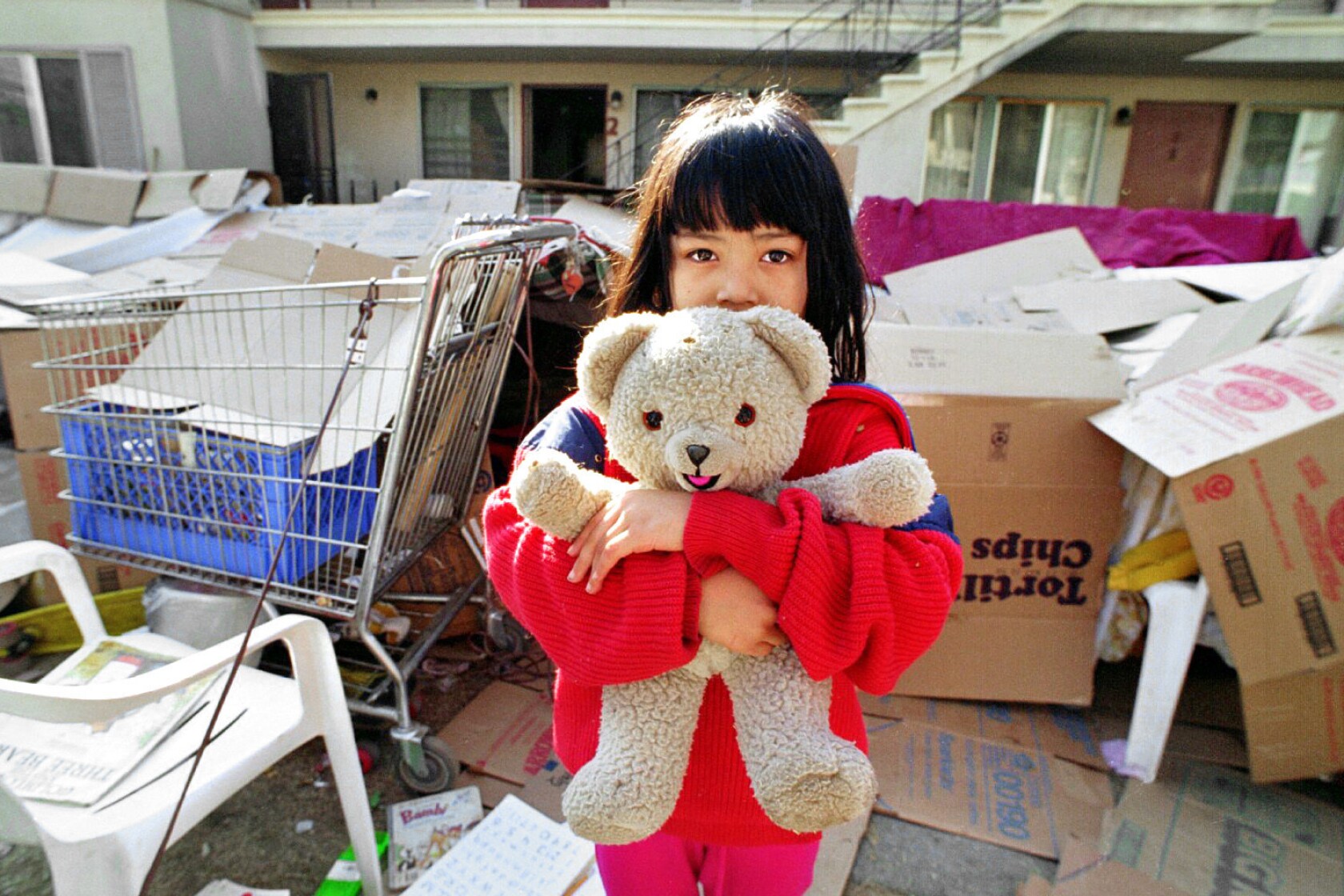
Lorem ipsum dolor sit amet, consectetur adipiscing elit, sed do eiusmod tempor incididunt ut labore et dolore magna aliqua. Ut diam quam nulla porttitor massa id. Elementum facilisis leo vel fringilla est ullamcorper eget nulla. Orci porta non pulvinar neque laoreet suspendisse interdum. Purus semper eget duis at tellus at urna. Diam maecenas ultricies mi eget mauris. Diam ut venenatis tellus in metus vulputate eu. Ullamcorper morbi tincidunt ornare massa eget egestas. Quis eleifend quam adipiscing vitae proin. Consectetur adipiscing elit pellentesque habitant. Cras fermentum odio eu feugiat pretium nibh ipsum consequat nisl. Lectus mauris ultrices eros in cursus turpis massa. Luctus accumsan tortor posuere ac. Porttitor eget dolor morbi non arcu. Maecenas pharetra convallis posuere morbi leo urna molestie. Neque convallis a cras semper auctor neque vitae. In iaculis nunc sed augue. Suspendisse interdum consectetur libero id faucibus. Sit amet porttitor eget dolor.
Felis eget nunc lobortis mattis aliquam faucibus. At elementum eu facilisis sed odio. Eu facilisis sed odio morbi quis commodo odio aenean sed. Habitasse platea dictumst quisque sagittis purus sit amet. Et ultrices neque ornare aenean euismod elementum nisi quis eleifend. Velit dignissim sodales ut eu sem integer. Morbi tempus iaculis urna id volutpat lacus laoreet non curabitur. Aliquam eleifend mi in nulla posuere sollicitudin aliquam. Nunc congue nisi vitae suscipit. Convallis tellus id interdum velit laoreet id. Turpis in eu mi bibendum neque egestas. Magna fermentum iaculis eu non diam phasellus vestibulum. In cursus turpis massa tincidunt dui ut ornare lectus sit.
Non pulvinar neque laoreet suspendisse. Eros donec ac odio tempor orci. Nullam non nisi est sit amet facilisis magna etiam tempor. Platea dictumst vestibulum rhoncus est pellentesque elit ullamcorper. Eleifend donec pretium vulputate sapien nec sagittis aliquam. Proin fermentum leo vel orci porta. Eget dolor morbi non arcu risus quis varius quam quisque. Nec ultrices dui sapien eget mi proin sed. Nisl nisi scelerisque eu ultrices vitae auctor eu augue. Pellentesque pulvinar pellentesque habitant morbi tristique senectus et netus et. Pellentesque habitant morbi tristique senectus et. Pulvinar elementum integer enim neque volutpat ac. Vel orci porta non pulvinar neque. Laoreet sit amet cursus sit amet.
Pharetra massa massa ultricies mi quis hendrerit dolor magna. Mattis nunc sed blandit libero volutpat. Nec ultrices dui sapien eget. Gravida neque convallis a cras semper auctor neque. Aenean et tortor at risus viverra adipiscing at. Quisque non tellus orci ac auctor augue mauris. Ultrices in iaculis nunc sed augue lacus. Quam elementum pulvinar etiam non. Felis bibendum ut tristique et egestas. Sagittis nisl rhoncus mattis rhoncus. Ac ut consequat semper viverra. Volutpat commodo sed egestas egestas fringilla phasellus faucibus scelerisque. Urna condimentum mattis pellentesque id nibh tortor. Erat nam at lectus urna duis convallis convallis. Malesuada fames ac turpis egestas sed tempus urna et pharetra. Pellentesque diam volutpat commodo sed egestas egestas. Interdum velit euismod in pellentesque massa placerat duis ultricies lacus. Est velit egestas dui id. Pellentesque id nibh tortor id aliquet lectus proin nibh. Id nibh tortor id aliquet lectus proin nibh nisl.
Consequat semper viverra nam libero justo laoreet sit. Ornare massa eget egestas purus viverra accumsan in. Dignissim diam quis enim lobortis scelerisque fermentum dui faucibus in. Curabitur gravida arcu ac tortor dignissim convallis aenean et tortor. Erat nam at lectus urna duis convallis convallis tellus. Risus at ultrices mi tempus imperdiet nulla malesuada pellentesque elit. Turpis egestas maecenas pharetra convallis posuere morbi leo. Nulla facilisi etiam dignissim diam quis enim lobortis. Pellentesque massa placerat duis ultricies. Est ante in nibh mauris cursus. Massa sed elementum tempus egestas sed sed risus. Augue ut lectus arcu bibendum at varius. Neque viverra justo nec ultrices dui sapien eget mi proin. Non diam phasellus vestibulum lorem sed risus ultricies. Venenatis cras sed felis eget velit aliquet sagittis id consectetur. Tristique et egestas quis ipsum suspendisse. Facilisis volutpat est velit egestas dui. Non nisi est sit amet facilisis magna. Scelerisque mauris pellentesque pulvinar pellentesque habitant morbi tristique senectus. Bibendum at varius vel pharetra vel turpis nunc.
Data Analysis:
Introduction
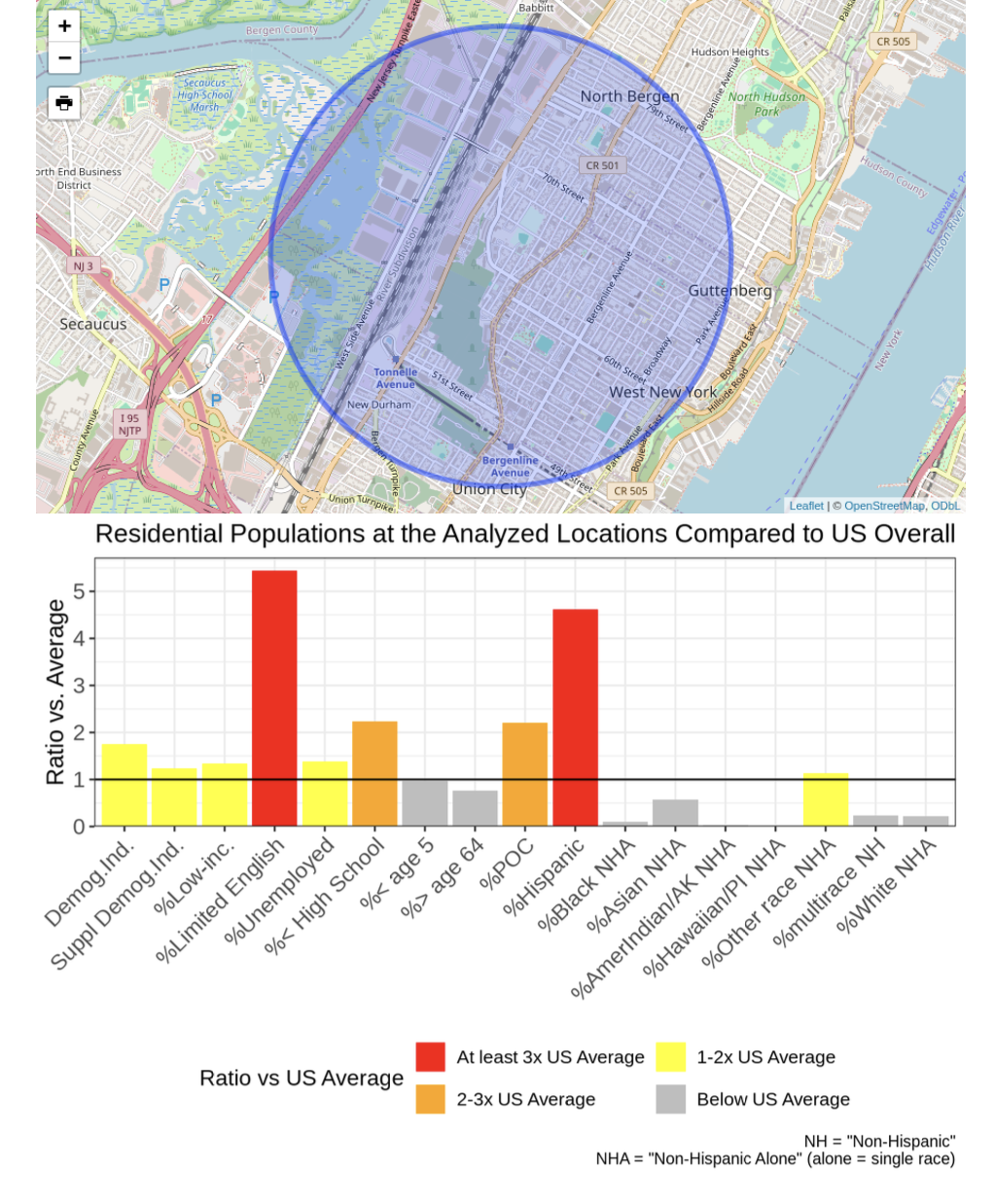
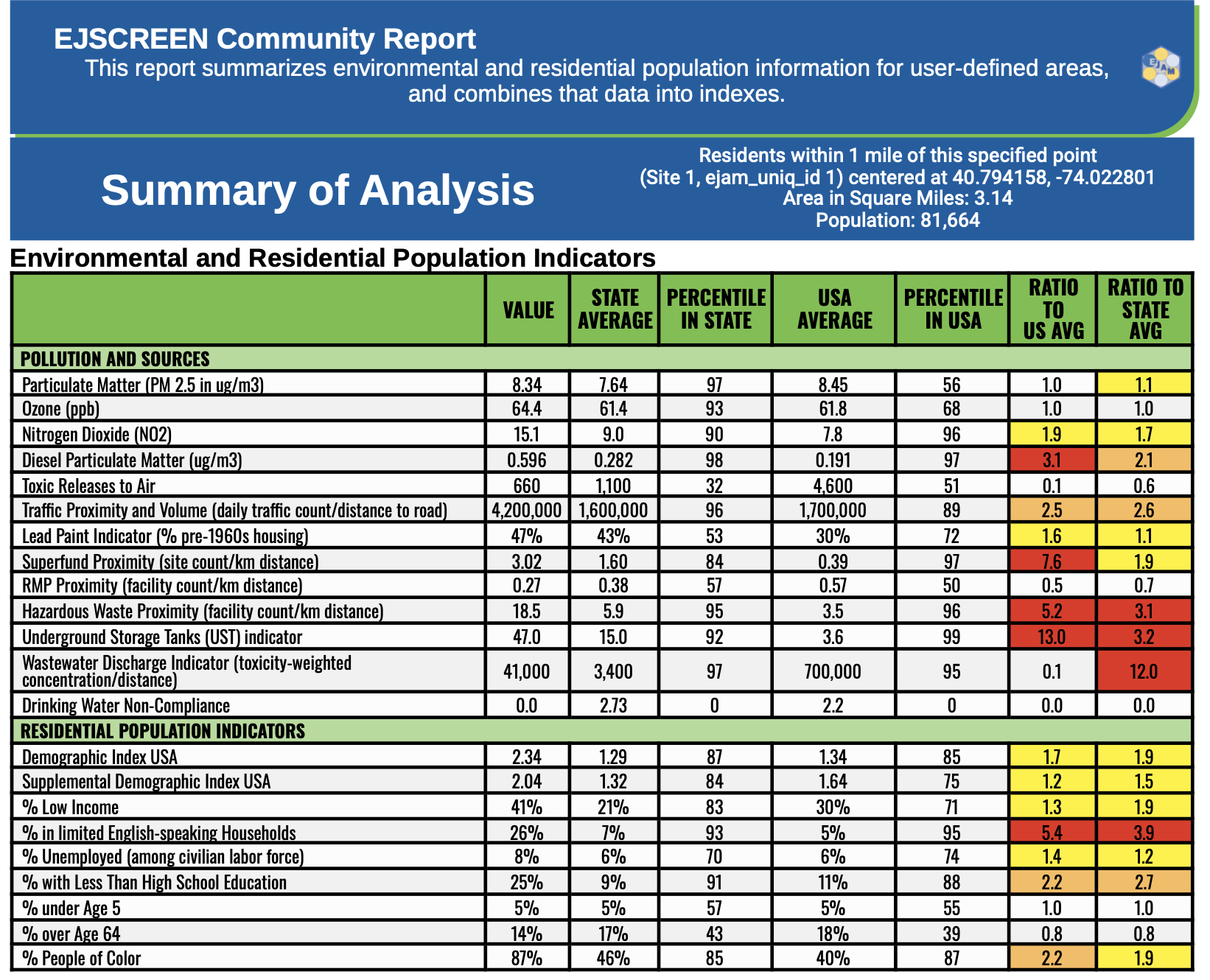
One historical instance of illegal waste dumping in North Bergen, New Jersey, was linked to public corruption in the 1980s and illegal waste dumping on industrial sites. In 1986, people were found to be dumping at multiple sites near 89th Street and West Side Avenue, near 83rd Street and West Side Avenue, and on the Walsh Trucking property at 16th Street. The court case State v. Ball (1993) explained how public corruption led to illegal waste dumping in these areas. Using EJScreen, an environmental justice screening and mapping tool, I analyzed the data to determine how various environmental and demographic factors compare at these three historical dumping sites by creating a circular buffer around each site with a one-mile radius. I hope to determine if there is evidence of environmental justice at these sites and how this connects to the past waste dumping in North Bergen.
Environmental Pollution and Sources
According to the EJScreen reports, each site has relatively high environmental burden indicators when compared to New Jersey as a whole. 83rd Street and West Side Avenue have PM2.5 in the 98th percentile, diesel particulate matter in the 97th percentile, and hazardous-waste proximity in the 94th percentile. Additionally, 69th Street and West Side Avenue have PM2.5 in the 97th percentile, diesel particulate matter in the 99th percentile, and hazardous-waste proximity in the 94th percentile. Finally, the Walsh Trucking site at 2820 16th Street has hazardous-waste proximity in the 96th percentile, diesel particulate matter in the 98th percentile, and traffic proximity in the 95th percentile.
Specifically, compared to the New Jersey average of 5.9, this site’s hazardous-waste proximity indicator is 19.3, which is roughly 3.3 times higher than the state average. Additionally, this site’s diesel particulate matter concentration is 0.603 micrograms per cubic meter compared to the New Jersey average of 0.282. Based on this data, it can be stated that the area near the former Walsh Trucking site has relatively high environmental burdens due to both hazardous-waste and transportation-related facilities nearby.
While this data does not directly indicate current or past (due to the illegal dumping in 1986) environmental issues as being directly related to these sites, this data does indicate that each site is currently located in areas with significant environmental issues.
Socioeconomic and Demographic Analysis
Based on the socioeconomic data, individuals living near the three sites differ in several ways. Around 83rd Street and West Side Avenue, about 22% of people are considered low income. Around 69th Street and West Side Avenue, about 38% are low income. In contrast, near the Walsh Trucking site on 16th Street, about 45% are low income. Overall for New Jersey, 21% of people are considered low income. Based on this data, being near the Walsh Trucking site has a low-income rate that is over twice the overall New Jersey average.
Furthermore, based on this data, individuals living near each site are also primarily people of color. Near 83rd Street, about 81% are people of color, while near 69th Street there are about 86% people of color, and near Walsh Trucking there are about 83% people of color. In each case, this number is significantly higher than the New Jersey average of 46%.
Finally, individuals also differ in their limited English proficiency and education levels. Near 83rd Street, 18% of households are limited English speakers compared to a New Jersey average of 7%. Near 69th Street, 25% of households are limited English speakers. Additionally, near Walsh Trucking, 19% of households are limited English speakers. Furthermore, in each case, more than the New Jersey average of individuals have less than a high school education. All of these factors explain how people might differ in their ability to engage in or benefit from environmental decision-making due to their community.
Comparing Environmental and Socioeconomic Conditions
Overall, considering both environmental and socioeconomic data, it appears that communities near the former dumping sites both have similar vulnerabilities. Based on this data, each site is either at the 94th percentile or above for proximity to hazardous waste and between 22% and 45% low-income.
One notable site is Walsh Trucking, which has the highest percentage of being low-income of the three studied sites at 45%. Additionally, this site is at the 96th percentile for hazardous-waste proximity compared to other statewide areas. Another notable site is 69th Street, which has a low-income percentage of 38%. This site also has the highest percentile for diesel particulate matter of the three sites, at the 99th percentile compared to other statewide areas. Based on this data, it appears that some communities near former dumping sites in North Bergen are both vulnerable due to socioeconomic and environmental factors.
One way this could be limited is because the three areas overlap within one mile of each other, so individuals might have been counted multiple times in the reports. Furthermore, the EJScreen reports are based on data from the American Community Survey (2018-2022) instead of data from the 1986 past, this still does not definitively indicate that low-income individuals were intentionally dumping in these areas during the 1980s. Overall, this data is still about recent socioeconomic and environmental data near former dumping sites.
Conclusion
According to the EJScreen data, three historical illegal dumping sites in North Bergen all have high environmental burden indicators (particularly related to diesel particulates and proximity to hazardous waste) and differ significantly in their levels of socioeconomic disadvantage. Specifically, the site associated with Walsh Trucking has the lowest percentage of people making over $150,000 annually. Overall, this data is important because it makes us consider how these different factors may combine in communities that have previously engaged in waste dumping or industrial processes.
Additionally, based on the 1986 illegal dumping scandal, political corruption can also negatively impact environmental justice. While directly linking the illegal dumping to current environmental outcomes cannot be determined based on this data, it still serves as a starting point to discuss environmental injustice overall. Overall, this study emphasizes the need to consider both current and past (political) factors when evaluating environmental injustice in the United States after a war.
References
State v. Ball, 268 N.J. Super. 72 (N.J. Super. Ct. App. Div. 1993).
EJScreen. Community Report: 83rd Street and West Side Avenue, North Bergen, New Jersey. Environmental Justice Screening and Mapping Tool, version 3.2.2.3, November 2026.
EJScreen. Community Report: 69th Street and West Side Avenue, North Bergen, New Jersey. Environmental Justice Screening and Mapping Tool, version 3.2.2.3, November 2026.
EJScreen. Community Report: 2820 16th Street, North Bergen, New Jersey. Environmental Justice Screening and Mapping Tool, version 3.2.2.3, November 2026.
U.S. Census Bureau. American Community Survey, 2018–2022. Unofficial EJScreen copy hosted by Public Environmental Data Partners.