The Convergence of Enviornmental Inequality and Social Justice for Marginalized People in Newark Education
by Ardit Fejzullai
Site Description:
I am studying environmental conditions and social inequality in Newark’s schools within the central and southern wards. I will be focusing on the 1960s and 70s since this was a time when the environmental and social justice movements had spread across the nation. The social justice movement involved the civil rights movements and the Newark riots in the mid and late 1960s. There is an extensive and ever-growing scholarship on the economic, housing, and educational inequalities that caused the Newark riots. There is also vast number of studies regarding the various pollution sites, health concerns, and impact on neighborhoods within Newark. I will aim to converge the concerns of the two movements within Newark’s school conditions. Centering Newark’s education as pollution sites within environmental studies will be a new position that will argue that environmental pollution must be tackled in public institutions because children are the first victims. Simultaneously, centering Newark’s education with environmental inequality will also present a new perspective to tackling social inequality. I seek to know how environmental conditions in schools can be central to solving social inequality? How do activists and social leaders conceptualize educational issues with social and environmental inequality? Finally, by placing children as the primary victims, and schools as the primary sites of pollution in a society can we this the starting position for a new form of environmental resistance? Using educational and environmental theories I am to center children because pollution begins to impact us at a young age and can have lasting effects before we encounter pollution as adults in other spaces outside the home and school.
Lorem ipsum dolor sit amet, consectetur adipiscing elit, sed do eiusmod tempor incididunt ut labore et dolore magna aliqua. Ut enim ad minim veniam, quis nostrud exercitation ullamco laboris nisi ut aliquip ex ea commodo consequat. Duis aute irure dolor in reprehenderit in voluptate velit esse cillum dolore eu fugiat nulla pariatur. Excepteur sint occaecat cupidatat non proident, sunt in culpa qui officia deserunt mollit anim id est laborum.
Lorem ipsum dolor sit amet, consectetur adipiscing elit, sed do eiusmod tempor incididunt ut labore et dolore magna aliqua. Ut diam quam nulla porttitor massa id. Elementum facilisis leo vel fringilla est ullamcorper eget nulla. Orci porta non pulvinar neque laoreet suspendisse interdum. Purus semper eget duis at tellus at urna. Diam maecenas ultricies mi eget mauris. Diam ut venenatis tellus in metus vulputate eu. Ullamcorper morbi tincidunt ornare massa eget egestas. Quis eleifend quam adipiscing vitae proin. Consectetur adipiscing elit pellentesque habitant. Cras fermentum odio eu feugiat pretium nibh ipsum consequat nisl. Lectus mauris ultrices eros in cursus turpis massa. Luctus accumsan tortor posuere ac. Porttitor eget dolor morbi non arcu. Maecenas pharetra convallis posuere morbi leo urna molestie. Neque convallis a cras semper auctor neque vitae. In iaculis nunc sed augue. Suspendisse interdum consectetur libero id faucibus. Sit amet porttitor eget dolor.
Felis eget nunc lobortis mattis aliquam faucibus. At elementum eu facilisis sed odio. Eu facilisis sed odio morbi quis commodo odio aenean sed. Habitasse platea dictumst quisque sagittis purus sit amet. Et ultrices neque ornare aenean euismod elementum nisi quis eleifend. Velit dignissim sodales ut eu sem integer. Morbi tempus iaculis urna id volutpat lacus laoreet non curabitur. Aliquam eleifend mi in nulla posuere sollicitudin aliquam. Nunc congue nisi vitae suscipit. Convallis tellus id interdum velit laoreet id. Turpis in eu mi bibendum neque egestas. Magna fermentum iaculis eu non diam phasellus vestibulum. In cursus turpis massa tincidunt dui ut ornare lectus sit.
Non pulvinar neque laoreet suspendisse. Eros donec ac odio tempor orci. Nullam non nisi est sit amet facilisis magna etiam tempor. Platea dictumst vestibulum rhoncus est pellentesque elit ullamcorper. Eleifend donec pretium vulputate sapien nec sagittis aliquam. Proin fermentum leo vel orci porta. Eget dolor morbi non arcu risus quis varius quam quisque. Nec ultrices dui sapien eget mi proin sed. Nisl nisi scelerisque eu ultrices vitae auctor eu augue. Pellentesque pulvinar pellentesque habitant morbi tristique senectus et netus et. Pellentesque habitant morbi tristique senectus et. Pulvinar elementum integer enim neque volutpat ac. Vel orci porta non pulvinar neque. Laoreet sit amet cursus sit amet.
Pharetra massa massa ultricies mi quis hendrerit dolor magna. Mattis nunc sed blandit libero volutpat. Nec ultrices dui sapien eget. Gravida neque convallis a cras semper auctor neque. Aenean et tortor at risus viverra adipiscing at. Quisque non tellus orci ac auctor augue mauris. Ultrices in iaculis nunc sed augue lacus. Quam elementum pulvinar etiam non. Felis bibendum ut tristique et egestas. Sagittis nisl rhoncus mattis rhoncus. Ac ut consequat semper viverra. Volutpat commodo sed egestas egestas fringilla phasellus faucibus scelerisque. Urna condimentum mattis pellentesque id nibh tortor. Erat nam at lectus urna duis convallis convallis. Malesuada fames ac turpis egestas sed tempus urna et pharetra. Pellentesque diam volutpat commodo sed egestas egestas. Interdum velit euismod in pellentesque massa placerat duis ultricies lacus. Est velit egestas dui id. Pellentesque id nibh tortor id aliquet lectus proin nibh. Id nibh tortor id aliquet lectus proin nibh nisl.
Primary Sources:
Title: “The City of Newark, New Jersey”
Link: https://archive.org/details/NewarkMapNL14
Location: Newark Public Library Digital Maps Collections, Central Planning Board of Newark; Published 1972
Description: This map, published in 1972, designed by the Central Planning Board of Newark, indicates block by block the use of space. It is a color-coded zoning map which can be used to highlight how the city was red lined and where the schools with the worst environmental conditions are located.
Title: “Official Ward Maps”
Link: https://archive.org/details/NewarkWardMap1969
Location: Newark Public Library Digital Maps Collections, 1969
Description: This map shows the boundaries of the 5 city wards for Newark. It will help me and my reader distinguish the wards and become familiarize with Newark’s geography. The boundaries of the wards will also be used and cross referenced with other maps to show which wards have higher rates of poverty, pollution, and degraded school conditions.
Title: “School District and Census Track Map – Newark, NJ”
Link: https://archive.org/details/NewarkMapND17
Location: Newark Public Library Digital Maps Collections, 1966
Description: This map will be to distinguish the various schools and which districts they belong to. The goal of the project is to specify which communities and neighborhoods are impacted the most with environmental risks in education. The ward maps will help us distinguish which areas of the city are divided by class and race. The school district maps will prove a more narrow view of which neighborhoods and districts suffer more due to economic standings.
Title: “Land Use Plan – City of Newark, NJ – Master Plan 1964” Planning Consultant: Candeus, Fleissig, Adley and Associates; Published 1964
Link: https://archive.org/details/NewarkMapND16
Location: Newark Public Library Digital Maps Collections
Description: It shows the usage of land across Newark block by block. It also shows the dwelling density in each block. The dwelling density can be cross-examined with school districts and show correlation between overcrowded neighborhoods and overcrowded schools. It can also be used to discuss how close or far a school is from industrial and commercial sites.
Title: “City of Newark, New Jersey” Hagstrom Co. ; Published 1979
Link: https://archive.org/details/NewarkMapF1
Location: Newark Public Library Digital Maps Collections
Description: Published by Hagstrom Co. this map shows the various roads, highways, turnpikes, railroads, and airports in Newark. This map will be important to define the proximity of Newark schools to high traffic paths. This will be used to link air and automobile pollution to school’s exterior environment.
Title: “East Ward Canidate Air Views on Schools, Pollution” Page 26 of Newark Evening News, published in Newark, New Jersey, on Friday, April 15th, 1966
Location: Newark Public Library Digital Collection Newark Evening News
Description: This section of the newspaper highlights the platforms of 3 major candidates for the East Ward seat for the city council. One candidate prioritizes building a stadium over schools, another was concerned about narcotics use, and the last candidate cited old school and air pollution as the biggest issues. The interesting part about this debate is that the other candidates changed course and also began discussing air pollution in the East Ward. This newspaper will clarify where local politicians stood with the concerns of the citizens regarding schools and pollution.
Title: “Helping City School Youth – But How?” Page 56 of Newark Evening News, published in Newark, New Jersey, on Sunday, April 30th, 1967
Location: Newark Public Library Digital Collection Newark Evening News
Description: This news article summarizes a debate among educators, superintended, Principal, Teacher Union leader, and educational theorist. The debate revolved around increasing the quality of teachers, increasing or decreasing the number of teachers, and Dr. Carl Bereiter’s ideas on kindergarten reforms. This debate will be used for my theoretical discussion on increasing children’s “ecological intelligence”. The reform that Bereiter suggests can be implemented to provide environmental education in addition to the regular curriculum in public schools.
Title: “Teen Students Discuss How to Fan a Protest” Page 42 of Newark Evening News, published in Newark, New Jersey, on Sunday, March 16th, 1969
Location: Newark Public Library Digital Collection Newark Evening News
Description: This article discusses Rutgers student groups holding open meeting to discuss students protest organizations to pressure the school to change certain policies. This meeting and organization is open and hopeful to reach out to high school students as well. Despite the group being majority white, there is a strong anti-racist agenda. The group highlights the racial discriminations in college acceptance and teacher prejudice. This article can be used to discuss how local Newark students attempted to organize, educate, and support each other to improve education and school conditions.
Title: “Barringer Protest” Page 13 of Newark Evening News, published in Newark, New Jersey, on Friday, November 17th, 1967
Location: Newark Public Library Digital Collection Newark Evening News
Description: This section of the Evening newspaper describes the student boycott and protest over school conditions and deadlock between the teacher’s union and board of education. It seems everyone is not satisfied with the board of education and their lack of solutions to the school’s problems. This will be used as one of a few examples of general student and teacher dissatisfaction with school conditions across the entire city of Newark and surrounding areas.
Title: “City Teacher Resignations High” Page 21 of Newark Evening News, published in Newark, New Jersey, on Tuesday, October 1st, 1968
Location: Newark Public Library Digital Collection Newark Evening News
Description: This article gives context into the teacher force that existed in Newark in the late 1960s. It describes that 15% are new teachers, it gives context into the philosophical debate that I mentioned in the “Helping City School Youth” debate. The question of teacher’s quality and quantity was a conversation happening across New York and New Jersey. This impacts students and schools because it causes disruption in curriculum and must be resolved at the same time as the physical and environmental pollutions within a school. As one of the primary concerns from teachers was the inadequate conditions across schools.
Primary Source Analysis
Title: “The City of Newark, New Jersey”
Link: https://archive.org/details/NewarkMapNL14
Location: Newark Public Library Digital Maps Collections, Central Planning Board of Newark; Published 1972
Description: This map, published in 1972, designed by the Central Planning Board of Newark, indicates block by block the use of space. It is a color-coded zoning map which can be used to highlight how the city was red lined and where the schools with the worst environmental conditions are located.
This map shows the entire city of Newark and was color coded to show the zone of each block based on what the land used was in 1972. The map was created by a city planning board which reflected a bureaucratic lens of an organized and categorized city. The city means to distinguish how each land is financially important to the city budget. The key for the map shows how the city is divided into “industrial”, “residential”, “commercial” and “park/cemetery”. The east, south and central ward of the city are dominated by black and red blocks which indicate industrial and commercial zones. The residential neighborhoods within or near the red and black zones had populations that were overwhelmingly African Americans or Immigrants. On one hand these color-coded zones highlight land filled with what urban planners call blight. This provides the city with an excuse to introduce urban renewal projects and to displace people. Simultaneously ignoring community needs such as investment in neighborhood schools. The schools with the worst physical conditions and environmental pollution were consistently from these 3 wards.
Cross examination between this map and the demographics and family-income of the 5 wards may reveal discriminatory practices from city officials. This will be used to explain the cause for school conditions and lack of funding in marginalized neighborhoods. Richard Rothstein’s, The Color of Law: A Forgotten History of How Our Government Segregated America, will be a key framework for this sub-argument in the larger essay. Rothstein’s argued that the government and institution policies were vital to spatial segregation. The city of Newark allowing the east, south, and central wards to be mixed with industrial and commercial sites was intentionally devaluing property and environment. This devaluation would impact the loan acceptance rates for the marginalized groups living in the 3 toxic wards. The financial consequences of this would mean lower valued homes, less investment, more poverty, and not enough city/state funding. Meanwhile the west and north ward were almost entirely residential, park, or public land. These 2 wards had predominantly white demographics. The schools in these wards had more adequate physical conditions with far less pollution exposure. The color-coded zonings in the map show that government officials were willing to sacrifice the health of marginalized groups to maintain industrial business within the city boundaries. While city officials also preserved the reduced pollution exposure of more affluent and white neighborhoods. Spatial segregation is reflected in the wards land zoning and school exposure to pollution sites.
Comparing this map with a 1979 map of Newark’s major roads, highways, railroads, and airport will reveal the pollutions that are not color coded on this map. These routes of transportation disperse massive amounts of toxic fumes across the city’s air. The airport and major highways within and around Newark remain uncolored in this 1972 map. Whereas the 1979 map will reveal the vast amount of major routes that cut through the city. The neighborhoods and schools closest to these routes are once again African Americans or immigrants. Environmental studies regarding the air pollution in Newark will specify the health risks from living in these areas. These routes re-enforced spatial segregation by displacing marginalized groups to create entry and exit points for businesses and suburbanites. Spatial segregation economically limited the mobility of marginalized groups. Therefore, the residents and schools remained poor and exposed to air pollution. Air pollution is one factor of exterior environmental pollution affecting marginalized children in Newark when they are outside the school grounds. This reflects the dual exterior and interior pollution occurring for Newark school children. The interior pollution largely meant deteriorating physical conditions. Often these deteriorating conditions involved old classrooms where temperatures could become dangerously cold or hot.
Secondary Sources:
- Sellers, Christpoher C. Crabgrass Crucible: Suburban Nature & Rise of Environmentalism in Twentieth-Century America. The University of North Carolina Press 2012. https://uncpress.org/9781469621852/crabgrass-crucible/
Chapters 2-4 focus on growing social concerns and focus on long island suburban residents embrace nature and have fresh clean air and water. While the book mainly focuses on household and neighborhood concerns for residents it does have few glimpses of environmental concerns regarding school yards, water, air, and building conditions. I would be using this book to add that Newark parents of low-income families in the central and southern wards also had similar concerns. This connection will be used to argue that the environmental movement existed and was strong in urban spaces. Sellers’ focus and argument of environmental movements being rooted in suburban spaces is valid. The book and the suburban movements ignored the fact that low-income marginalized people were left out of the broader conversation and had to fight through their own movements.
- Arena, John. Expelling Public Schools: How Antiracist Politics Enable School https://www.upress.umn.edu/9781517913687/expelling-public-schools/
I will be using this book to tie my focus on Newark’s older environmental and social justice movements to modern Newark, where school conditions and urban low-income families are still neglected. Chapter 4&5 discuss grassroot movements whose goals are to stop the city from cutting school funding, improving school conditions, and improving the quality of education. Through this book and my analysis of civil justice movements in the past and present I will argue these movements highlight civil rights equity is intertwined with grassroots education and environmentalism.
- Russakoff, Dale. The Prize: Who’s in Charge of America’s Schools? Mariner Books Boston 2015. https://www.amazon.com/dp/0547840055?lv=shuf&channelId=500&plpRedirect=mhFallback
This book also has a political and social focus on Newark’s education. The primary focus of the book is the $100 million investment by Mark Zuckerberg and Governor Christies interferences. These 2 public figures represent bureaucratic and elite businessmen who attempt to enforce their reformist visions on Newark’s schools without knowing the issues that the students and families are concerned with. This book also allows me to highlight that concerns around biomicritic educational reform do not prioritize environmental conditions and students’ health. It re-enforces my argument that environmental and educational reforms are not connected in policies. To this day the quality of health and education for urban low-income families are not being prioritized in the larger environmental and social justice movements. Chapter 3 discusses Zuckerberg’s investment and where that money actually went. It highlights the continuation of leaking roofs, cold classrooms in the winter, and hot classrooms in the summer. At the same time janitors, union workers, and school officials were earning inflated wages for incomplete or inadequate repairs and maintenances.
- Yaffe, Deborah Other People’s Children: The Battle for Justice and Equality in New Jersey’s Schools. Rutgers Newark Press 2007. https://www.barnesandnoble.com/w/other-peoples-children-deborah-yaffe/1113482125?ean=9780813543932
This literature provides historical context on social justice movements through educational reforms and provides glimpses where concerns regarding school funding and physical conditions relate to environmental concerns. Through Deborah’s book I can analyze the school conditions, staff issues, and bureaucratic problems which highlight that the environmental conditions of low-income urban families were absent from the larger environmental movement in the 1960s&70s. This literature allows me to tie past and present scholarships, like Russakoff and Arena, and the absence of making a clear connection between social and political problems with environmental concerns. Chapters 7&8 go into detail about poor school conditions and overcrowded classes in the 1960s&70s.
- Lewis, Tyson E. and Grinberg, Jaime G.A. Philosophy of Education: Modern and Contemporary Ideas at Play. “CH.34, C.A. ‘Chet’ Bowers: Toward an Eco-Justice Pedagogy Root Metaphors in Critical Pedagogy the Root Metaphor Underlying an Eco-Justice Pedagogy” Kendall Hunt Publishing Company 2009. https://digitalcommons.montclair.edu/all_books/382/
This chapter on Chet Bowers, a well-known educational philosopher, discusses his theories on educational theories and Eco-Justice. I will be using Bowers’ theory to explain why it is important to converge scholarly arguments of social justice, educational reform, and environmentalism. Bowers puts heavy emphasis on teachers being cultural care takers who can take on the role of mediators between local and global cultures. Teachers are key to helping students develop “ecological intelligence” by creating a stronger awareness of local cultural practices, alternative cultural practices and the dangers of contemporary ecocrisis. His theory will allow me to highlight that scholarship on children’s care and intellectual development is key to create stronger social, political, and environmental urban history.
- Hart, Roger A. Children’s Participation: The Theory and Practice of Involving Young Citizens in Community Development and Environmental Care. Routledge London 1997. https://doi.org/10.4324/9781315070728 .
Hart’s theory on active participation for children will be important as I will be combining it with Bower’s theory on ecological intelligence. My idea is that Bowers provides the theory on how we can use culture and education to help children become conscious of ecological problems while navigating cultural and political perspectives. Hart’s theory will be used to emphasis that the next step after developing “ecological intelligence” is to make children active participants in raising environmental issues, solutions, and planning for the present and the future. Hart provides a broad overview on how this issue can be tackled in urban, rural, low-income, and middle-class communities. This is important to me because another problem in American environmentalism is the disconnect between the agendas of the working class and middle class. At the same time it also re-enforces my ideas that children need to be taken more seriously and must be included in the environmental and social justice movements as equals in order to truly tackle the root issues of inequality.
- Lytle, Darren A., Michael R. Schock, Casey Formal, Christina Bennett-Stamper, Stephen Harmon, Mallikarjuna N. Nadagouda, Daniel Williams, Michael K. DeSantis, Jennifer Tully, and Maily Pham. “Lead Particle Size Fractionation and Identification in Newark, New Jersey’s Drinking Water.” Environmental Science & Technology (WASHINGTON) 54, no. 21 (November 2020): 13672–79. https://doi.org/10.1021/acs.est.0c03797.
AND
- Dressel, Isabella M., Mary Angelique G. Demetillo, Laura M. Judd, Scott J. Janz, Kimberly P. Fields, Kang Sun, Arlene M. Fiore, Brian C. McDonald, and Sally E. Pusede. “Daily Satellite Observations of Nitrogen Dioxide Air Pollution Inequality in New York City, New York and Newark, New Jersey: Evaluation and Application.” Environmental Science & Technology (WASHINGTON) 56, no. 22 (November 2022): 15298–311.
https://doi.org/10.1021/acs.est.2c02828.
These 2 chapters of environmental scholarship and research provides context for some of the many research projects on Newark’s various pollution issues. This will be used as a reference to the environmental scholarships’ great efforts to highlight various forms of pollution like water and air. For the purposes of my essay I will add that this kind of important scientific research must be aligned with historical scholarship and educational reform. The historians I mentioned may have focused only on the political and social analysis in Newark, these environmental scholars have only focused on the scientific analysis. The great work from both sides of scholarships can be developed into a greater and more helpful conversation when we converge their analysis. For me this convergence will occur in Newark’s education system where both topics are important to solving inequality and are absent in scholarly discourse.
Historiographical Analysis
There has been extensive research and history of Newark’s environmental and social inequalities. Sellers’ Crabgrass Crucible is focused on environmental movements in the suburbs during the mid-20th century. However, to me it was introductory scholarship to environmental history. It is the ideal literature for me to discuss and add the argument that environmentalism needs to be studied with greater nuance and specificity in relation to urban movements. Deborah’s Other People’s Children: The Battle for Justice and Equality in New Jersey’s Schools covers the inadequate school conditions in Newark during the 1970s which reflects the social and educational inequalities continuing despite the legislative reforms following the civil rights movement of the 1960s. Arena’s Expelling Public Schools covers the period between 1990-2010 with grassroot movements against Newark’s public schools losing funding while the schools’ physical conditions were in bad condition. Meanwhile Russakoff’s The Prize: Who’s in Charge of America’s Schools? Covers almost the same period while discussing Newark’s bureaucratic system failing on educational reform and mismanagement of funding and improving school conditions. The chapter “Lead Particle Size Fractionation and Identification in Newark, New Jersey’s Drinking Water” by Darren A. Lytle’s and his collaborative group provides an environmental study which proved the existing pollution in Newark’s water and its dangers to the residents. While “Daily Satellite Observations of Nitrogen Dioxide Air Pollution Inequality in New York City, New York and Newark, New Jersey: Evaluation and Application.” by Isabella M. Dressel presented the pollution levels and risks of the air pollution in Newark and the surrounding area. There will be other pollutions and histories of pollutions covered to discuss what is absent from environmental scholarship. Tyson E. Lewis’ Philosophy of Education: Modern and Contemporary Ideas at Play provides the philosophical framework that children need to be taught “ecological intelligence” by teachers by changing the understanding and usage of local and global cultural practices. Finally Hart’s Children’s Participation: The Theory and Practice of Involving Young Citizens in Community Development and Environmental Care will provide the philosophical and educational framework that pushes for children to be more centered in environmental movements, activism, and planning.
My position will be to bring social and political history together with environmental studies. I view both fields as fundamental to our existential crisis with climate change accelerating rapidly and the global lingering of humanity’s habits of mass pollution. This project led me to search and grasp a deeper understanding of environmental history and studies. I have found that there is extensive research and data on the various pollutions in Newark from the past to the present. However, education and the impact of these pollutions on education and children is mainly absent and if mentioned it is brief in the larger conversations. While in social and political history there is a great set of literature on educational inequalities and reform. There have been studies on the various inequalities that exist within the Newark education system as well. Though in this case there is an absence of environmental pollution and their ties to social and political inequalities is absent in historical scholarship. I will bring these two fields of research together to center education and children’s health as the root of social, political, and environmental inequalities. In order for any movement, regardless of the issue, to achieve their long-term goal they must focus on children. Children need to be made aware of the environmental issues in their local area and how to deal with them. In order to maintain a strong movement of activism the next generations must have the intellectual and materialistic tools to maintain and build upon the previous generation’s success.
Image Analysis:
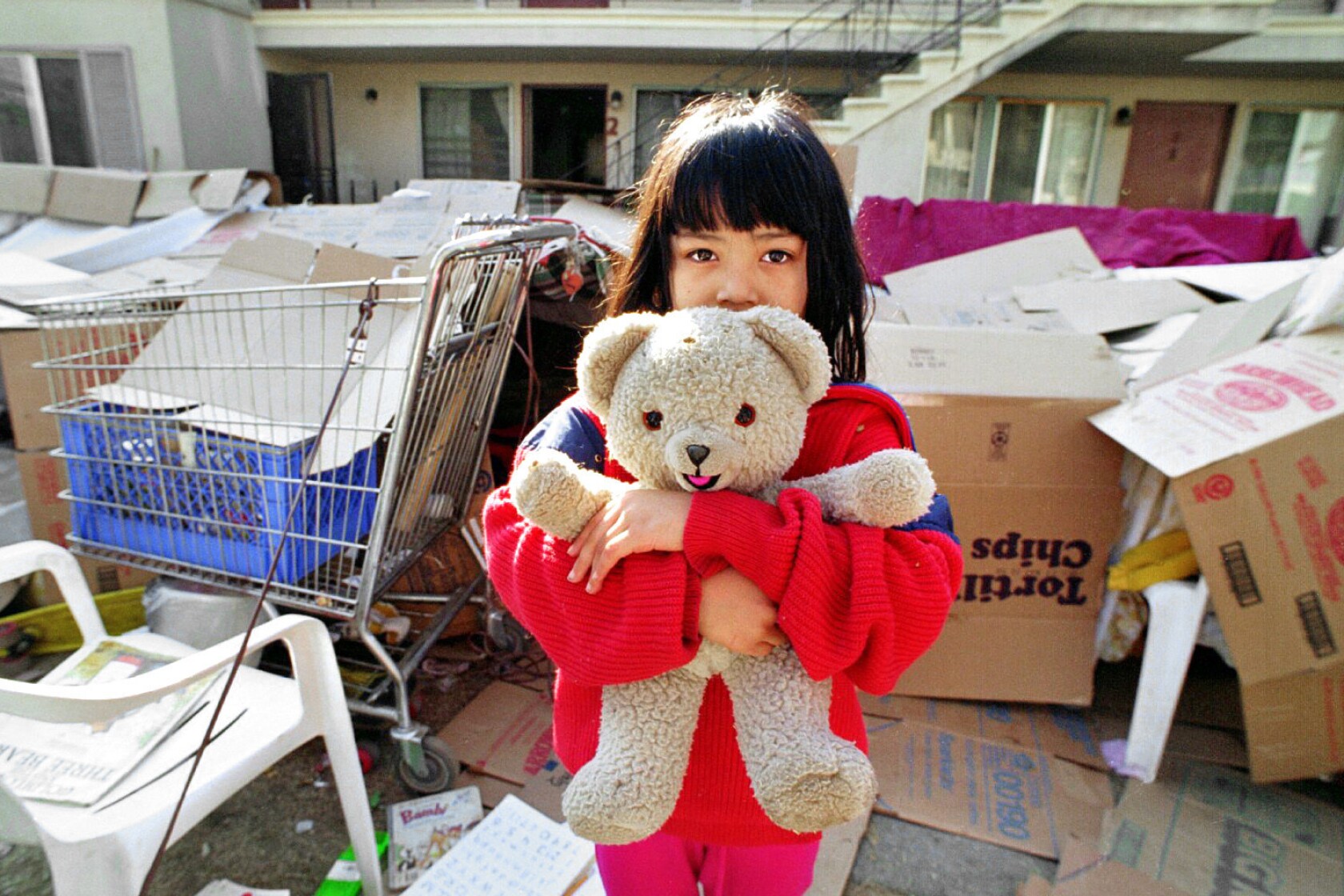
Image 1: https://archive.org/details/NPSHPCTeachersStrike0128
Image 2: Will be used in the same discussion to provide more context that teacher strike was concerned about making schools better for children. https://archive.org/details/NPSHPCTeachersStrike0027
Image Analysis
The image I am presenting in my argument involves the 1971 Newark teachers strike. The teachers strike involved teachers and schools from all 5 wards. Teacher participation and community support for the strike differed based on racial lines. The image was taken by an unnamed photographer working for Van Picture Services Inc. This was donated to the Newark Public Library by the Newark Public Schools Historical Preservation Committee. It was originally published on January 10, 1971. It is not clear who published this image, however, considering the teachers’ strike got extended coverage from Newark and New York news outlets we can safely presume it was for a news story. The image is important to my overall argument because it provides a small glimpse to the racial divide for the teachers strike. I will be comparing this image to other images that show picket signs promoting teachers care about making school conditions better for Newark school children. The teachers strike had underlying environmental concerns that have not be recognized by media or scholars. This image will be used to introduce and highlight what the racial divisions were and why they were important.
The first thing you noticed when viewing the image is an African American family walking away from a group of teacher strike supporters. The family’s position is in the front and to the right of the photo center. Perhaps the photographer did not see the African American family as the most important element in the story. Though they are important enough to be in the very front. Their position, which was walking away from the strike support group, suggests the family does not agree with the teachers’ strike. The mother is holding her head high while her arms are reaching out as if they were to cover all of her children. She is taking a defensive stance as if she is concerned with her children’s safety from the strike supporters. The high head shows that she felt proud and right with her positioning. There are 4 children with the mother; the older boy and girl are smiling, the younger girl is smirking, and the younger son is the only one who looks worried. The 3 smiling children show that the family generally seemed safe and unbothered while the young and worried boy’s face hints at some degree of tensions in this moment. The physical expressions and postures of the family indicate the racial and political tensions between them and the group of white middle class parents in support of the strike.
The clothes of the family reveal the class tensions that come with racial difference. The family has thin coats, and their hands are in their pockets. Their clothing reveal that the African American family probably comes from a working-class background. They seem cold but perhaps do not own thicker coats. This is significant because the lack of support from African Americans towards the strike was about having better school conditions and more concern with the continuation of school attendance for African American children. For African American parents it is more important for their children to maintain their routine, stay in school, and do not fall behind on education. Considering that African American women had to work more than middle class white women the children’s attendance to school was crucial to the children’s psychological development and physical health. The psychological being the education of the young minds and the physical being in a school with controlled temperature in a cold winter.
The group of white adults behind the African American family are positioned behind in the background for this photo. The group consists of white adult men and women who are positioned in the center of the photo despite being behind the African American family. This signals that the photographer viewed this group as the most important element in the teacher’s strike story. Making the African American family as the opposing, and negative, element in the story. The group of white adults are holding a sign reading “parents support teachers”. In reality, it should read “white parents support teachers”. To understand this racial division, it is important to acknowledge that the city of Newark had a drastic change in demographics. The city went from having a majority white population in 1960 to becoming a majority black population by 1971. The growing population of the city, the growing population of students in Newark schools, and the growing tasks for Newark teachers were major changes that led to the strike. Racial conflicts, suburban flight, urban decay, and overwhelmed city bureaucracy dominated Newark in the decade prior to the teachers strike.
The clothes worn by the group of white parents further reflects the class and racial divisions between them and the African American family. The white parents were wearing thicker coats with fur and cheetah print styles. Their nice coats and gloves reveal their middle-class position. Two white women have their heads turned to look at the family walking away. Their facial expressions display judgement towards the family for ignoring and crossing the picket line. This reflects the racial superiority mindset that was prevalent in Newark and across America.
The final aspect of this image that I wish to discuss is the roles of the parents and children. The children’s positionality in the teacher strike is determined by the positionality of their parents. The 4 African American children are following their mother as they collectively ignore the picket line. The group of white parents have a couple of young children accompanying the while they show protest to the teachers. The children do not seem to have individual opinions in this specific moment. I find this significant in correlation to the theoretical argument of my essay. Student participation in social and environmental activism with a heightened “ecological intelligence” is crucial to strengthening a movement striving for change and equity. The lack of independent positionality for the children in the 1971 teachers strike should be considered an additional fracture to the existing racial divide. Considering schools exist to educate children, this image severely deprives us of the affected children’s opinions regarding the teachers on strike.