Unpack the Frack: Contaminated Drinking Water in Dimock, PA (2009-2026)
by Damian Moreira
Site Description:
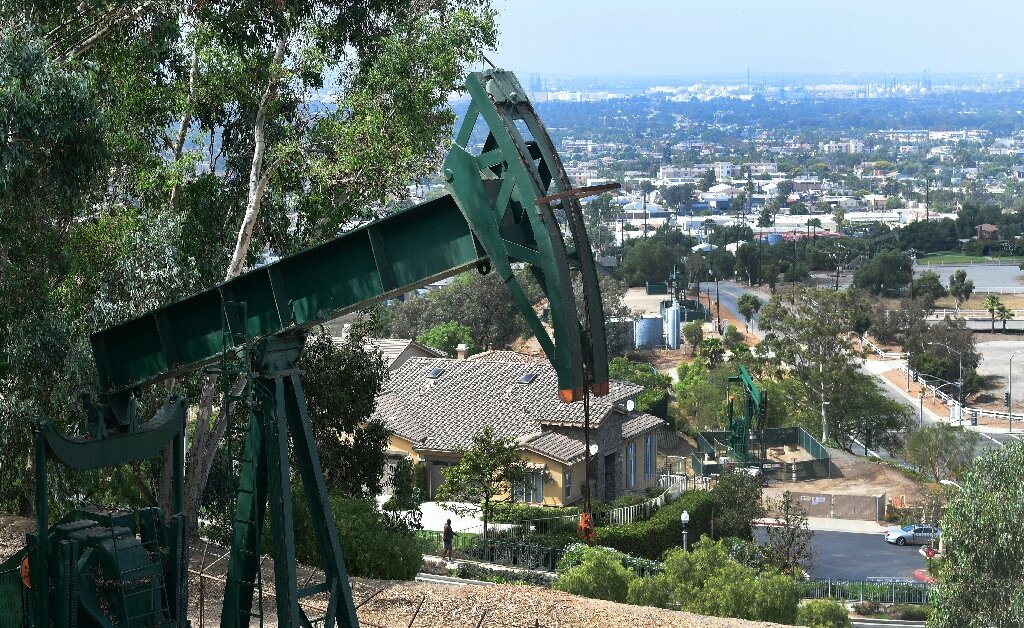
Dimock, Pennsylvania is a village within the Dimock Township, Susquehanna County, whose location would be considered the beginning of the mainstream controversy over fracking. This rural and agricultural community turned into an industrial one when a company known at the time as Cabot Oil & Gas began fracking in the area in 2008. Fracking was already controversial at the time, and this fracking site would further increase that controversy when it leaked methane gas into privately owned underground water wells in the Dimock township in 2009. The focus of my research project is to find out why Cabot was allowed to continue fracking after violating numerous environmental safety laws and constant protest by locals. Additionally, my research will examine what made Dimock a target to fracking and why its residents won against Cabot Oil & Gas. In finding these answers, it will help formulate a better understanding of how fracking became a bigger environmental injustice after the crisis was caused in Dimock. Fracking is mostly known to contaminate the air and surface water with pollutants, but rarely do people consider the groundwater and its impact on the surface environment. I would like to bring attention to this fact.
Lorem ipsum dolor sit amet, consectetur adipiscing elit, sed do eiusmod tempor incididunt ut labore et dolore magna aliqua. Ut enim ad minim veniam, quis nostrud exercitation ullamco laboris nisi ut aliquip ex ea commodo consequat. Duis aute irure dolor in reprehenderit in voluptate velit esse cillum dolore eu fugiat nulla pariatur. Excepteur sint occaecat cupidatat non proident, sunt in culpa qui officia deserunt mollit anim id est laborum.
Lorem ipsum dolor sit amet, consectetur adipiscing elit, sed do eiusmod tempor incididunt ut labore et dolore magna aliqua. Ut diam quam nulla porttitor massa id. Elementum facilisis leo vel fringilla est ullamcorper eget nulla. Orci porta non pulvinar neque laoreet suspendisse interdum. Purus semper eget duis at tellus at urna. Diam maecenas ultricies mi eget mauris. Diam ut venenatis tellus in metus vulputate eu. Ullamcorper morbi tincidunt ornare massa eget egestas. Quis eleifend quam adipiscing vitae proin. Consectetur adipiscing elit pellentesque habitant. Cras fermentum odio eu feugiat pretium nibh ipsum consequat nisl. Lectus mauris ultrices eros in cursus turpis massa. Luctus accumsan tortor posuere ac. Porttitor eget dolor morbi non arcu. Maecenas pharetra convallis posuere morbi leo urna molestie. Neque convallis a cras semper auctor neque vitae. In iaculis nunc sed augue. Suspendisse interdum consectetur libero id faucibus. Sit amet porttitor eget dolor.
Felis eget nunc lobortis mattis aliquam faucibus. At elementum eu facilisis sed odio. Eu facilisis sed odio morbi quis commodo odio aenean sed. Habitasse platea dictumst quisque sagittis purus sit amet. Et ultrices neque ornare aenean euismod elementum nisi quis eleifend. Velit dignissim sodales ut eu sem integer. Morbi tempus iaculis urna id volutpat lacus laoreet non curabitur. Aliquam eleifend mi in nulla posuere sollicitudin aliquam. Nunc congue nisi vitae suscipit. Convallis tellus id interdum velit laoreet id. Turpis in eu mi bibendum neque egestas. Magna fermentum iaculis eu non diam phasellus vestibulum. In cursus turpis massa tincidunt dui ut ornare lectus sit.
Non pulvinar neque laoreet suspendisse. Eros donec ac odio tempor orci. Nullam non nisi est sit amet facilisis magna etiam tempor. Platea dictumst vestibulum rhoncus est pellentesque elit ullamcorper. Eleifend donec pretium vulputate sapien nec sagittis aliquam. Proin fermentum leo vel orci porta. Eget dolor morbi non arcu risus quis varius quam quisque. Nec ultrices dui sapien eget mi proin sed. Nisl nisi scelerisque eu ultrices vitae auctor eu augue. Pellentesque pulvinar pellentesque habitant morbi tristique senectus et netus et. Pellentesque habitant morbi tristique senectus et. Pulvinar elementum integer enim neque volutpat ac. Vel orci porta non pulvinar neque. Laoreet sit amet cursus sit amet.
Pharetra massa massa ultricies mi quis hendrerit dolor magna. Mattis nunc sed blandit libero volutpat. Nec ultrices dui sapien eget. Gravida neque convallis a cras semper auctor neque. Aenean et tortor at risus viverra adipiscing at. Quisque non tellus orci ac auctor augue mauris. Ultrices in iaculis nunc sed augue lacus. Quam elementum pulvinar etiam non. Felis bibendum ut tristique et egestas. Sagittis nisl rhoncus mattis rhoncus. Ac ut consequat semper viverra. Volutpat commodo sed egestas egestas fringilla phasellus faucibus scelerisque. Urna condimentum mattis pellentesque id nibh tortor. Erat nam at lectus urna duis convallis convallis. Malesuada fames ac turpis egestas sed tempus urna et pharetra. Pellentesque diam volutpat commodo sed egestas egestas. Interdum velit euismod in pellentesque massa placerat duis ultricies lacus. Est velit egestas dui id. Pellentesque id nibh tortor id aliquet lectus proin nibh. Id nibh tortor id aliquet lectus proin nibh nisl.
Primary Sources:
https://www.epa.gov/sites/default/files/2015-07/documents/atsdr.pdf
This document was written by the Agency for Toxic Substances and Disease Registry as per request by the EPA Region 3 Water Protection Division. The report gives a brief description of the Dimock fracking site and the events that happened to explain why this report was made in the first place. The focus of the report is to provide a data analysis of samples gathered from the 18 contaminated wells and what actions the residents of Dimock should do to avoid health problems. This document proves the severe water contamination in Dimock’s ground water but more importantly, the lack of care the ATSDR put into proving this fact.
The ATSDR’s laxness is proven by: 1) the questionable evaluation methods used on these samples, 2) the uncertainty of which of the samples taken are really a health risk, and 3) a data gap for organic chemicals. The untrustworthiness of the evaluation methods come from page 2 of the report which explicitly states, “Note, it is fairly unusual for metal contamination to be detected in field blanks, as was documented in the summary sampling data provided. Therefore, the quality control of the field sampling methods needs to be further evaluated”. The uncertainty of which samples are possible health can be seen on page four discussion the ethylene glycol count in the water. “It should also be noted that four additional samples may have exceeded the ATSDR EMEG of 8,000 ~g/L with sample results indicated in the data package as less than 10,000 ~g/L.” The gap in data is admitted in the conclusion of this report, but this fact can be determined on page 3 when reading, “Not all the private wells in this data set were analyzed for organic constituents.” Overall, the ARSDR’s general inattention of Dimock’s water crisis can be seen by their inability to provide a trustworthy, knowledgeable, and complete data analysis of the water samples.
Title:
“THEY’RE GASLIGHTING US: PENNSYLVANIA’S RESPONSE TO FRACKING IS, FRANKLY, RATHER SICKENING.” Philadelphia Daily News, Sep 07, 2023
Type of Source: Newspaper
Location/Link:
Online Database- ProQuest:
https://www.proquest.com/newspapers/theyre-gaslighting-us/docview/2861614469/se-2
Description:
This newspaper will help my research paper because it gives information on specific people and companies. This source is not only speak about Dimock but the entire Marcellus formation.
Title:
ATSDR Record of Activity/Technical Assist written by the EPA on 12/28/2011
Type of Source: Company report
Location/Link:
Online Database- EPA.gov: This was found in a primary source newspaper article on ProQuest.
https://www.epa.gov/foia/agency-toxic-substances-and-disease-registry-evaluation-dimock-pa-private-well-data
Description:
This is a report written by the Agency for Toxic Substances and Disease Registry (ATSDR) to evaluate Dimock’s private wells for data for EPA’s Region 3 office in Philadelphia. It is to identify any potential health threats. This is the only non-newspaper primary source I have, and it’s from an official health institution.
Title:
Fracking, written by Wilkes Barre on 7/2/2012
Type of Source: Newspaper
Location/Link:
Online Database- ProQuest: https://www.proquest.com/newspapers/fracking/docview/1023121591/se-2?accountid=35725
Description:
This is a newspaper article very similar to my other primary source, “THEY’RE GASLIGHTING US: PENNSYLVANIA’S RESPONSE TO FRACKING IS, FRANKLY, RATHER SICKENING” except in this one asks the serious question of “Why energy companies are not facing consequences for all the harm they caused with fracking?” This will help restate and answer the “Why companies were allowed to continue fracking?” question in my research paper.
Title: “Dimock gets water supply” written by the Philadelphia Tribune on 1/22/2021
Type of Source: Newspaper
Location/Link:
Online Database- ProQuest: https://www.proquest.com/pq1academic/newspapers/dimock-gets-water-supply/docview/920876302/sem-2?accountid=35725
Description:
This newspaper article states that Dimock finally got a victory in the water crisis because the EPA finally stepped in, and now that residents will finally have clean water to drink again. This is important to include in my research paper because it was an empty victory because residents still did not have a reliable source of clean water until 2026.
Title: “EPA backs off after fracking probe Staff sought more study of Pa. wells’ water” written by Banerjee Neela on 7/31/2013
Location/Link:
Online Database- ProQuest:
https://www.proquest.com/newspapers/epa-backs-off-after-fracking-probe-staff-sought/docview/1415714925/se-2?accountid=35725
Description:
This article talks about how the EPA abandoned their investigation on Dimock’s drinking water even after finding extensive proof of the unsanitary levels of methane in it. This shares the same idea as the other primary sources that talk about companies being exempt from environmental laws, but with this source, it gives insight to the EPA specifically.
Secondary Sources:
Abayev, Inessa. “HYDRAULIC FRACTURING WASTEWATER: MAKING THE CASE FOR TREATING THE ENVIRONMENTALLY CONDEMNED.” Fordham Environmental Law Review 24, no. 2 (2013): 275–327. http://www.jstor.org/stable/26195846.
This source examines the dangers of shale gas extraction done by fracking and how companies who run these operations get away with it. In this case, the article will give a better understanding of how Cabot Oil & Gas was able to find loopholes in environmental laws so that they may continue to frack and continue to profit. Even though their fracking operations leaked toxic chemicals that contaminated Dimock residents’ underground water wells, they were never stopped because everything was technically done by the books. The piece also goes into detail about the Clean Water Act and the Safe Drinking Water Act, and what specifically about them were able to exempt corporations from adequately regulating their fracking sites.
Ground Water Protection Council and ALL Consulting. Modern Shale Gas Development in the United States: A Primer. Pittsburgh: U.S. Department of Energy, National Energy Technology Laboratory, 2009. http://www.netl.doe.gov/technologies/oil-gas/publications/epreports/shale_gas_primer_2009.pdf
This document provides information on the history and development of shale formations in the United States, fracking technology, regulations for fracking, and environmental protection polies. The information of the shale formations is mostly data such as location, size, gas content, etc. The regulations for fracking are dependent on the environmental policies such as the Clean Water Act and the Safe Drinking Water Act. Such regulations are overviewed by federal agencies like the NEPA (National Environmental Protection Agency) but most of the focus will be on the state agency, specifically the Pennsylvania Department of Environmental Protection and the Bureau of Oil and Gas Management. Using this information, it will provide numerical data on the Marcellus Shale formation and prove why Dimock was a target for fracking.
FISCHETTI, MARK. “The Drillers Are Coming.” Scientific American 303, no. 1 (2010): 82–85. http://www.jstor.org/stable/26002103 .
This scientific article discusses the conflict between energy corporations and environmental regulators on the Marcellus Shale formation. For this research paper, the energy corporation would be Cabot Oil & Gas, and the environmental regulators would be the Pennsylvania Department of Environmental Protection (DEP). The article continues about the “boom” of hydraulic fracturing and that corporations are expending all their energy into this method of natural gas extraction. Due to this fact the Marcellus Shale is seeing more fracking, and it is causing a growing issue of groundwater contamination, thus, causing a growing issue in public health. The author warns the reader that there needs to be an increase of oversight on fracking regulations as it is becoming more mainstream. This article will give a better understanding of the history of raising technology and its policies. Also, it will give more information regarding why fracking was able to continue in Dimock after all the groundwater contamination.
Image Analysis:

This photo was taken by a reporter for the WIVA News, Isabela Weiss on August 16, 2024, and it was taken before the official announcement of the opening of the Dimock Environmental Research Center. When this event took place, it had been 15 years since the toxic water crisis began in Dimock, PA, and it would continue to get worse. In 2022, however, the crisis ceased when a settlement was agreed upon to replace the infested private water wells with a public water network to provide clean drinking water to Dimock homes. Even though the residents Dimock were victorious in achieving clean drinking water, they believed it was necessary to have their own system of observing and analyzing their tap water – without the untrustworthiness and hassle of federal and state operated environmental safety agencies.
Looking first at the center of the photo, a woman is seen wearing an outfit that is very different from what everyone else in the photo is wearing. This woman is Victoria Switzer, and she is a retired school teacher who worked and lived in Dimock for most of her adult life. She is dressed casually in a white blouse and green skirt, while everyone else is wearing a working outfit in their T-shirt and jeans. She seems to be directing or informing the people she is facing about how the announcement will proceed. A resident being the one to oversee this event shows that Dimock wants to be free from any major environmental safety agency like the EPA or PADEP. Additionally, even though she is dressed the most comfortably, she is doing arguably the hardest and most important job, suggesting that it is the residents that are doing the most to secure their win over clean water.
Looking behind Victoria Switzer, a sign on the makeshift stage can be seen and it reads, “Dimock Environmental Research Center”. This is the community’s way of achieving their independence from environmental safety agencies such as the EPA or the PADEP. The purpose of this institution was specifically created to observe the tap water coming from the soon completed underground pipeline so that Dimock could know if it was safe to consume. This grassroot research center would give complete independence from any major environmental divisions.
Looking at the setting of the photo, it can be easily determined that this is the backyard of a residential home. This home belongs to Ray Kemble who is a resident of Dimock and donated his home so that it would become the official address of the Dimock Environmental Research Center. Ray Kemble lived there for a while and put a lot of resources into making himself comfortable. This can be seen with the costly grill on the left of the photo and the porch heater on the right of the bald man in sunglasses. The donation of Ray Kemble’s home gave Dimock a place to conduct their own evaluations and research without the need to rely on the EPA or PADEP. This also proves how dedicated Dimmock residents were to achieve this goal.